

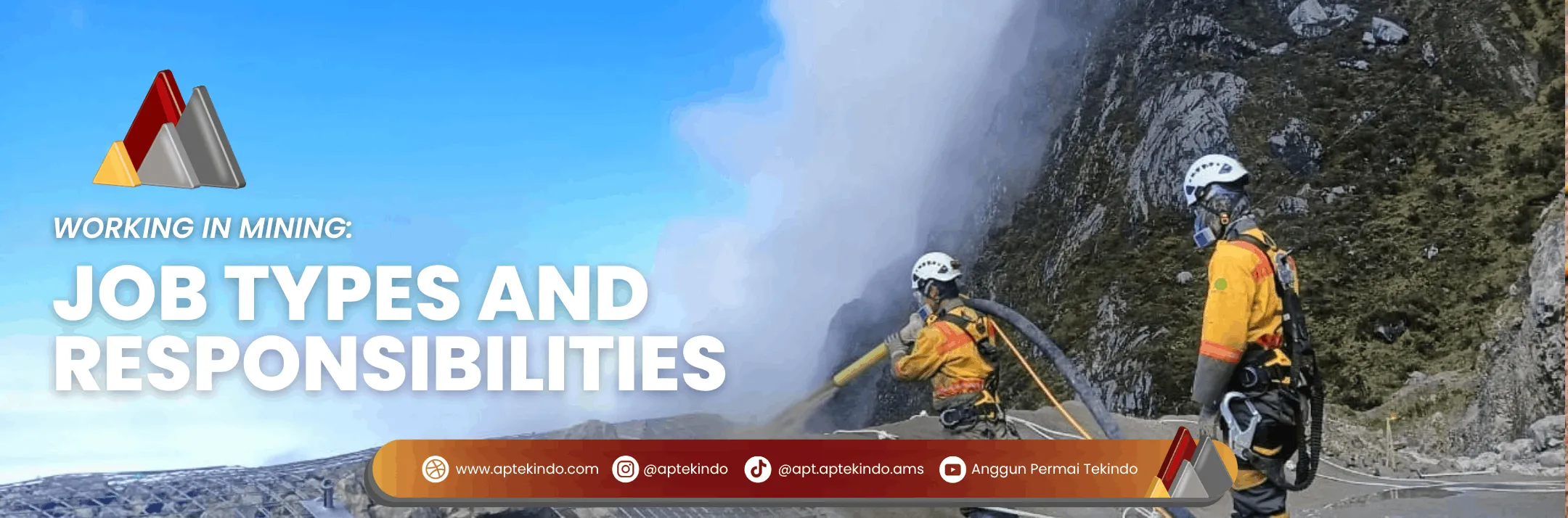
Working in Mining: Job Types and Responsibilities
Essential Skills Every Mining Worker Should Have
The mining industry is one of the key sectors supporting global energy and resource supply. To ensure mining operations run smoothly, safely, and efficiently, mining workers need to equip themselves with a range of specialized skills, from technical fieldwork to an awareness of safety and the surrounding environment.
Before discussing these skills one by one, it is important to first understand how mining works in general, from the people involved to how mining operations are carried out on a daily basis.
Understanding Mining Professions
Mining workers are people directly involved in extracting mineral resources from the ground. Their duties and responsibilities vary depending on their position, mining method, and the location where they work.
In general, they excavate and extract materials from underground and surface deposits, operate heavy equipment such as excavators, loaders, conveyor belts, and cutting machines, while also monitoring air quality, the structural condition of tunnels or slopes, and potential hazards such as explosions or fires.
Their responsibilities also extend to environmental management, including post-mining land rehabilitation and waste management. This range of tasks illustrates how mining works as a whole, from excavation to the responsibility of protecting the surrounding environment.
Various Positions in the Mining Industry
- Surface mining workers: Work in open-pit mines using methods such as strip mining or open-pit mining.
- Underground mining workers: Work in tunnels using methods such as room and pillar or longwall mining.
- Equipment operators: Operate and maintain mining equipment such as excavators, loaders, and conveyor belts.
- Technicians and engineers: Design, maintain, and improve mining systems and technologies.
- Safety officers: Enforce safety procedures, conduct routine inspections, and provide training.
Understanding these different positions is an important part of understanding how mining works as a whole, because each role supports the smooth operation of the same mining process.
Mastering Mining Equipment and Techniques
Mining workers need to be skilled in operating equipment such as excavators, loaders, crushers, and conveyor belts from setup and maintenance to handling technical problems in the field. Mastery of this equipment is central to how mining works on a daily basis, as nearly every extraction process depends on it.
An understanding of mining techniques, both surface and underground, is equally important. Methods such as strip mining, open-pit mining, and longwall mining involve different procedures and require specialized skills to ensure safe and effective execution.
Basic geological knowledge, such as rock formations and the processes by which deposits form, helps workers assess mining conditions and identify potential problems at an early stage.
Prioritizing Safety and Health at the Workplace
Workplace safety procedures are essential for everyone working at a mining site. Workers need to be trained to recognize and respond to potential hazards such as rockfalls, gas emissions, and fire risks, including understanding personal protective equipment and emergency evacuation procedures.
This is one of the main foundations of safe mining operations, because even a small lapse in attention can have fatal consequences.
Mining workers also frequently encounter hazardous materials, such as mine dust and methane gas. The ability to handle these hazards is important for preventing contamination and accidents, and usually involves an understanding of dust-control technologies and mine ventilation systems.
Managing Time and Solving Problems in the Field
Mining operations that stay on schedule and within budget depend on the ability to manage time and resources efficiently. This skill is an integral part of how mining works efficiently, as even a small delay can affect the entire production chain.
Problem-solving and quick decision-making are also valuable skills, given how rapidly field conditions can change. Assessing the situation, interpreting data, and making the right decision at a critical moment help keep mining operations running smoothly despite unexpected challenges.
Communicating and Working as a Team
The noisy and dynamic mining environment requires clear communication. Workers must be able to convey information concisely and listen to instructions from colleagues and supervisors, because communication errors in such settings can lead to real danger.
Mining work is also rarely an individual effort teamwork determines whether all members can work in coordination toward the same goal, share information, and maintain a productive and safe working environment.
Leading and Planning Operations
For workers in managerial or supervisory positions, the ability to lead and manage teams is a key factor. They are expected to motivate team members, resolve conflicts, and ensure everyone works effectively toward a common goal.
The ability to plan and control project execution also helps ensure mining operations remain on schedule and within budget, while identifying risks at an early stage.
Reading Data and Making Sound Decisions
Data collected during mining operations needs to be carefully reviewed and analyzed so that decisions are based on reliable information.
This ability helps workers recognize patterns, identify root causes, and make decisions grounded in accurate data. The ability to assess and manage risks also supports this process, helping workers identify potential hazards earlier and prepare appropriate mitigation measures.
Caring for the Environment and Surrounding Communities
Understanding and following best practices to reduce the environmental impacts of mining activities is an integral part of the job, from waste management and protecting natural habitats to complying with applicable environmental regulations.
Awareness of social responsibility and work ethics is also important, as workers need to understand how mining activities affect local communities and contribute to their well-being.
Maintaining Stamina and Physical Endurance
Mining work requires good physical fitness and endurance. Lifting heavy loads, working in harsh environmental conditions, and handling long working hours are part of everyday life, requiring workers to maintain their physical condition while reducing the risk of injury.
Mining workers may also need to work in extreme conditions, such as high temperatures and humidity or confined workspaces. The ability to work safely and remain productive in these situations is an important asset for anyone entering the industry.
Successful mining operations require a combination of technical, safety, managerial, and communication skills. Understanding how mining works as a whole, from technical expertise to social awareness, is a foundation for anyone who wants to build a career in the industry.
The mining training we offer provides an in-depth understanding of all these aspects, helping workers operate more safely, efficiently, and responsibly.
Reference
Gunawan, H. 2023. Kompetensi Karyawan terhadap Kinerja Karyawan dengan Safety Behavior sebagai Intervening pada Kegiatan Penambangan Batu Kapur Milik PT. Semen Tonasa (Studi Kasus pada Kuari Tambang Batu Kapur PT. Semen Tonasa) [tesis]. Makassar: Universitas Hasanuddin.
- Share