

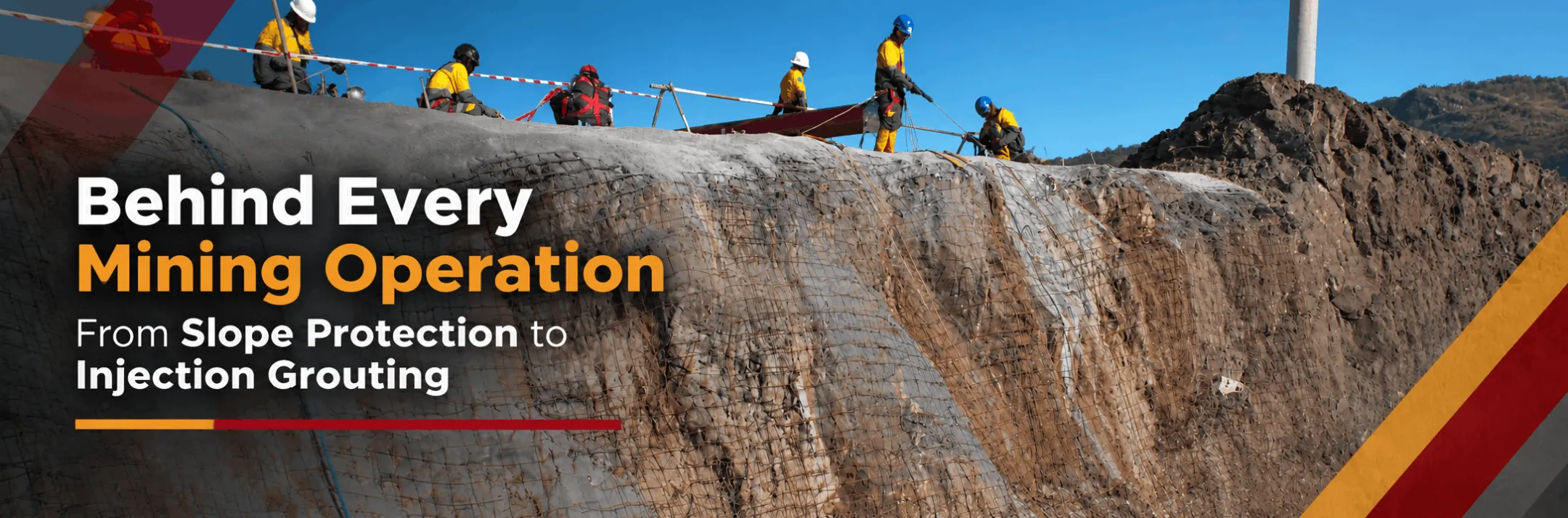
Behind Every Mining Operation: From Slope Protection to Injection Grouting
When people think about mining, they often picture heavy equipment, drilling, blasting, underground tunnels, or trucks transporting ore. Yet, behind every successful mining operation is a much more complex ecosystem involving engineering, technology, safety, construction, maintenance, and specialized technical services.
A mining project can take years to progress from exploration to development and production. The mining lifecycle generally includes exploration, mine development and construction, operation, closure, and post-closure activities. Each stage requires different expertise, technologies, and supporting services.
For operations working in challenging environments, specialized solutions such as slope protection, soil nailing, ground support, injection grouting, and batching plant operations can become important parts of the wider mining ecosystem.
Exploration: Understanding What Lies Beneath
Every mining project begins with exploration. Geologists and exploration teams investigate geological formations to identify mineral deposits and understand their characteristics.
Activities can include geological mapping, sampling, geophysical surveys, and drilling. The information collected provides the basis for understanding the orebody and determining whether a deposit has the potential to be developed economically.
Once a resource has been identified, the project progresses toward feasibility studies, mine planning, engineering, permitting, and development.
This stage demonstrates that mining is not simply an extraction activity. It is a long-term process that requires the integration of geology, engineering, economics, environmental considerations, and operational planning.
Mine Planning and Engineering
Mine planning determines how a mineral resource can be extracted safely and efficiently.
Mining engineers develop mining methods, production strategies, mine schedules, and overall mine designs. At the same time, geologists, geotechnical engineers, civil engineers, surveyors, mechanical engineers, electrical engineers, and other specialists contribute to the design and development of the operation.
The engineering challenges can differ significantly between surface and underground mining.
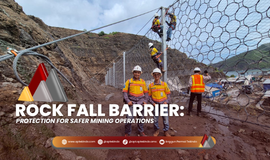
In open-pit operations, slope stability and slope protection are important considerations. Pit walls, haul roads, drainage systems, and other infrastructure must be designed according to geological and geotechnical conditions.
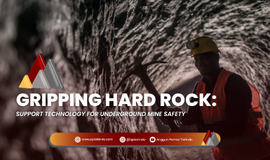
In underground operations, challenges can include tunnel excavation, shaft sinking, ground movement, rock mass behavior, groundwater, and excavation stability.
This is where ground support and ground stabilization become critical components of mine development.
Mine Development: Building the Infrastructure
Before production can begin, substantial infrastructure must be constructed.
Depending on the operation, mine development may include access roads, workshops, processing facilities, drainage systems, power infrastructure, concrete structures, batching plant operations, tunnels, shafts, and underground development.
A batching plant can support mining construction activities by providing concrete or shotcrete for infrastructure and underground applications. Consistent production, material quality, logistics, and quality control are important to ensure that concrete-based works meet project requirements.
For underground mining, excavations must also be supported according to the characteristics of the surrounding rock mass. Depending on the design and site conditions, solutions can include rock bolts, mesh, shotcrete, anchors, soil nailing, and other reinforcement systems.
Slope Protection and Soil Nailing
For surface mining and mining-related infrastructure, maintaining stable slopes is essential.
Slope protection is not limited to one particular method. Depending on geological, environmental, and project conditions, solutions may include drainage, erosion control, shotcrete, mesh, ground anchors, soil reinforcement, and other stabilization systems.
Soil nailing can be applied as part of a slope stabilization strategy where reinforcement is required to improve the stability of soil or weathered rock masses.
The appropriate system depends on factors such as soil and rock characteristics, slope geometry, groundwater conditions, loading, excavation methodology, and required design performance.
This highlights an important principle: effective slope protection is not simply about selecting a reinforcement product. It requires appropriate engineering assessment, design, installation, quality control, and consideration of actual site conditions.
APTEKINDO's portfolio includes slope protection and erosion control works as well as artificial slope stabilization systems. Its project experience includes the West Wanagon Slope Protection project at Grasberg Mine and a 2025 slope protection and erosion control project in North Sulawesi.
Injection Grouting and Ground Stabilization
Another specialized solution used in mining and underground construction is injection grouting.
Injection grouting involves introducing grout into cracks, fractures, voids, or selected zones within soil, rock, or structures to achieve a specific engineering objective.
Depending on the application, grouting may be used for ground consolidation, water control, void filling, structural rehabilitation, or improvement of ground conditions.
In underground mining, pre-excavation grouting can be considered before excavation where ground improvement or groundwater control is required. Post-excavation grouting, meanwhile, may be applied to address conditions identified after excavation.
The appropriate grout technology depends on factors such as permeability, fracture characteristics, water conditions, required penetration, and project objectives.
Consequently, injection grouting should not be viewed simply as a material supply activity. Successful application requires engineering assessment, material selection, application methodology, quality control, and field execution.
APTEKINDO's portfolio demonstrates practical experience in this area, including Grouting & Injection for the rehabilitation of the Ball Mill-2 foundation at PT Aneka Tambang's UBPE Pongkor processing plant.
The Role of Specialized Mining Companies
A modern mining operation does not work in isolation.
Mining companies are supported by a broad ecosystem of contractors, equipment providers, material manufacturers, engineering specialists, technology companies, and technical service providers.
This ecosystem enables mining companies to access specialized knowledge, materials, technology, and field expertise for specific operational requirements.
PT Anggun Permai Tekindo (APTEKINDO) operates within this ecosystem by providing specialized products, technology, and technical solutions for mining applications.
Its capabilities include concrete admixtures, shotcrete, grouting, injection systems, tunnelling, ground stabilization, consolidation, wall-face support, and groundwater control. APTEKINDO's website also highlights capabilities and project experience related to geotechnical solutions, artificial ground support, batching plant operations, and slope protection.
The company's project portfolio further demonstrates experience across different applications, including batching plant operations, artificial slope stabilization, ground anchor and micropile works, and grouting and injection.
This combination of product knowledge, technical expertise, and field experience represents an important distinction between simply supplying materials and delivering an integrated technical solution.
Safety and Responsible Mining
Technical solutions in mining ultimately support a broader objective: enabling operations to be conducted safely and responsibly.
The International Council on Mining and Metals (ICMM) identifies health and safety, risk management, environmental performance, biodiversity, responsible production, and stakeholder engagement among its Mining Principles. ICMM's health and safety principle emphasizes continual improvement with the ultimate goal of zero harm.
Environmental performance is equally important. ICMM highlights areas such as water stewardship, energy use, climate change, pollution prevention, and planning for mine closure.
Responsible production also requires consideration of resource efficiency, recovery, reuse, recycling, and responsible management throughout project design, operation, and decommissioning.
Therefore, engineering decisions made during mine development can have implications far beyond construction or production. They can influence safety, operational reliability, environmental performance, and the long-term sustainability of a mining project.
Mining Is a Multidisciplinary Ecosystem
A mining company is much more than an organization that extracts minerals.
It is an ecosystem involving geologists who understand the earth, mining engineers who design extraction methods, geotechnical engineers who assess ground behavior, operators who execute production activities, HSE professionals who manage risks, maintenance teams who maintain equipment availability, environmental specialists who manage impacts, and technical partners who provide specialized solutions.
Every discipline contributes to a common objective: developing mineral resources safely, efficiently, responsibly, and sustainably.
For specialized companies such as APTEKINDO, the opportunity lies in supporting this ecosystem with engineering-driven mining solutions—from slope protection and soil nailing for slope stabilization to injection grouting, ground consolidation, shotcrete, batching plant operations, and groundwater control.
Ultimately, successful mining is not defined only by how much mineral can be extracted. It is also defined by how effectively technology, engineering, people, and experience come together to create a safer, more reliable, and more responsible operation.
Daftar Pustaka
- International Council on Mining and Metals (ICMM). Mining Principles: Performance Expectations. ICMM. Referensi mengenai risk management, health and safety, environmental performance, biodiversity, responsible production, dan stakeholder engagement.
- International Council on Mining and Metals (ICMM). Principle 05: Health and Safety. Referensi mengenai peningkatan berkelanjutan dalam aspek kesehatan dan keselamatan kerja serta tujuan zero harm.
- International Council on Mining and Metals (ICMM). Principle 06: Environmental Performance. Referensi mengenai water stewardship, environmental performance, climate change, pollution prevention, dan mine closure.
- International Council on Mining and Metals (ICMM). Principle 08: Responsible Production. Referensi mengenai responsible design, use, reuse, recycling, dan disposal dalam industri pertambangan dan mineral.
- World Gold Council. How Gold is Mined: The Lifecycle of a Gold Mine. Referensi mengenai tahapan exploration, development, operation, closure, dan post-closure dalam siklus pertambangan.
- World Gold Council. The Social and Economic Contribution of Gold Mining. Referensi mengenai siklus kehidupan tambang dan kontribusi ekonomi dari berbagai tahap aktivitas pertambangan.
- PT Anggun Permai Tekindo (APTEKINDO). Portfolio. Referensi mengenai pengalaman proyek APTEKINDO, termasuk Batching Plant, Slope Protection & Erosion Control, Artificial Slope Stabilization System, serta Grouting & Injection.
- PT Anggun Permai Tekindo (APTEKINDO). Solusi Beton & Pertambangan. Referensi mengenai kapabilitas APTEKINDO dalam mining solutions, geotechnical solutions, artificial ground support, batching plant operations, dan slope protection.
- Share