


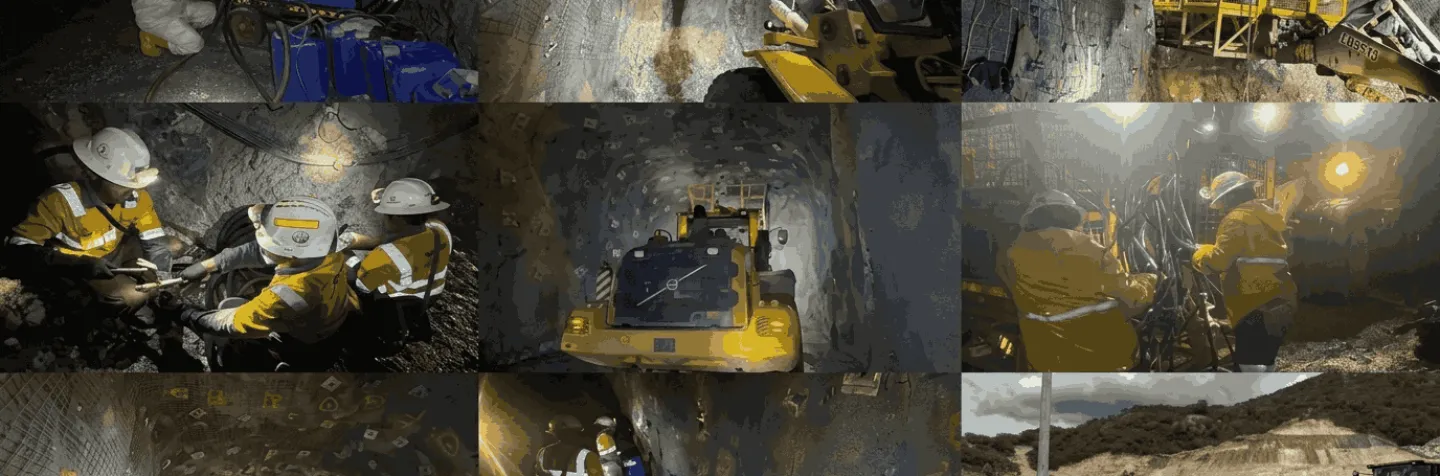
Injection grouting is a ground and rock reinforcement method that injects pressurized grout material (cement, chemical, or resin) into pores, voids, and fractures through boreholes. Its purpose is to fill gaps, increase strength and bearing capacity, and reduce water seepage in foundations, tunnels, dams, and mine slopes.
Key Takeaways
The core points before you read the full guide:
- Principle: injection grouting injects pressurized grout material into soil/rock to fill voids, strengthen the ground, and hold back water.
- Three main functions: filling voids & fractures, increasing bearing capacity and shear strength, and controlling water seepage (seepage control).
- Types by mechanism: permeation, compaction, fracture (claquage), and jet grouting; by application: consolidation, curtain, contact, and pre-excavation grouting.
- Materials: cement-based (cement slurry) for large voids; chemical/resin-based (epoxy, polyurethane) for fine cracks and strong water flow.
- Core stages: drilling → packer installation → staged pressurized injection → pressure & volume control → verification testing.
- Quality keys: permeability testing (Lugeon test), injection pressure design, the split-spacing method, and rigorous pressure–volume recording.
- Applications: heavy equipment foundations, tunnels, dams, tailings ponds, slopes, and underground mines.
Introduction
Soil and rock are not always strong or impermeable enough to carry loads and hold back water. Hidden voids, rock fractures, and permeable soil pores can trigger settlement of foundations, seepage in tunnels, and even leakage in dams and tailings ponds. Repairing them by re-excavation is often expensive, slow, and disruptive to operations.
Injection grouting offers a more efficient solution: repairing soil and rock from within without major demolition. By injecting pressurized grout, gaps are filled, the ground mass becomes denser and stronger, and water seepage paths are sealed.
This guide covers injection grouting for ground and rock reinforcement comprehensively: its definition and working principle, types and materials, construction stages, technical data, application examples, advantages and disadvantages, and recommendations. It is intended for geotechnical engineers, mine planning engineers, project managers, and procurement teams before they make design or procurement decisions.
What Is Injection Grouting?
Injection grouting (also called grout injection or cementation) is a ground and rock improvement method that injects a semi-viscous material (grout) under pressure into pores, voids, or fractures through boreholes. Once hardened, the grout binds soil particles and seals gaps, making the soil/rock mass stronger, denser, and more watertight.
The method is versatile: it can be used to strengthen foundations, stabilize slopes, reinforce the rock mass around tunnels, and even stop leaks in water-retaining structures such as dams and tailings ponds.
How Does Injection Grouting Work?
The process begins by drilling holes to the target depth, then installing a packer (a sealing device) to isolate the zone to be injected. Grout is then pumped at controlled pressure so that it permeates and fills pores and fractures. Pressure and volume are recorded continuously; injection is stopped when the refusal criterion is reached, that is, when the soil/rock no longer takes grout at the design pressure.
“Injection grouting does not dig out and replace the ground; it repairs it in place turning weak, permeable soil and rock into a dense, strong, and impermeable mass.”
The Three Main Functions of Injection Grouting
- Filling: filling voids and fractures so that no empty spaces remain that could trigger settlement or collapse.
- Strengthening: increasing the bearing capacity, cohesion, and shear strength of soil/rock so it can support heavier loads.
- Water control: sealing seepage paths (seepage control) to prevent water leakage in foundations, tunnels, and dams.
Types of Injection Grouting
The choice of grouting type depends on the soil type, the purpose of the work, and groundwater conditions. The following are the types based on mechanism:
- Permeation Grouting: Thin grout permeates and fills pores without altering the soil structure; best suited to granular soils/sand and rock fractures.
- Compaction Grouting: Uses stiff, high-pressure grout to densify and displace the soil; best suited to soft/cohesive soils and bearing capacity improvement.
- Fracture (Claquage) Grouting: Grout fractures the soil in a controlled manner to form reinforcing lenses; best suited to soils with low permeability.
- Jet Grouting: Uses ultra-high-pressure fluid jets to erode and mix the soil into soil-cement columns; best suited to a wide variety of soil types, such as for forming columns and retaining walls.
Based on application, the following terms are also commonly used:
- Consolidation grouting: strengthening the rock mass of foundations with low-pressure injection.
- Curtain grouting: forming an impermeable curtain beneath a dam to reduce seepage and uplift pressure.
- Contact grouting: filling the gap between the concrete lining and the rock in tunnels.
- Pre-excavation grouting: strengthening and stabilizing soil/rock before tunnel excavation begins.
Grout Materials: Cement-Based vs Chemical
Grout materials are selected according to the size of the gaps to be filled and the water conditions. In general, they fall into two groups:
- Material Examples: Cement-based grout uses cement slurry or a cement + bentonite/sand mixture, whereas chemical/resin grout uses epoxy, polyurethane (PU), and sodium silicate.
- Gap Size: Cement-based grout is intended for medium-to-large voids & fractures, whereas chemical/resin grout is intended for fine & hairline cracks.
- Water Conditions: Cement-based grout handles light-to-moderate seepage, whereas chemical/resin grout is effective at stopping strong water flow (thanks to the rapid expansion of PU).
- Cost: Cement-based grout is relatively economical, whereas chemical/resin grout tends to be more expensive.
- Typical Applications: Cement-based grout focuses on consolidation, curtain, and void filling, whereas chemical/resin grout focuses on sealing structural cracks and waterstop.
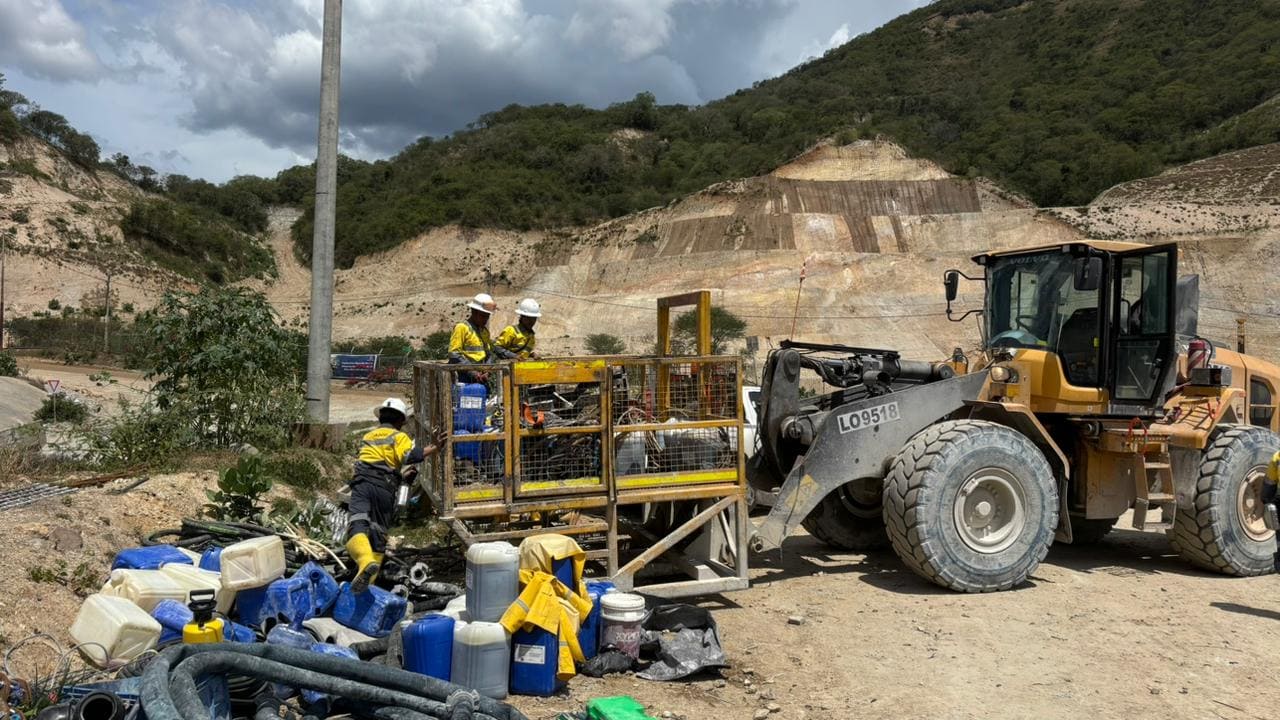
Figure 1. Chemical grout materials in jerrycans and drums, along with hoses, at a surface preparation area.
Injection Grouting Construction Stages
Although the details depend on the design, injection grouting generally follows this sequence:
- Investigation - Geotechnical investigation & permeability testing (e.g., Lugeon test) to determine the grouting design.
- Drilling - Drilling grout holes according to the design pattern and depth (split-spacing method: primary, secondary, tertiary).
- Packer installation - Installing packers to isolate the injection zone for each stage (top-down or bottom-up).
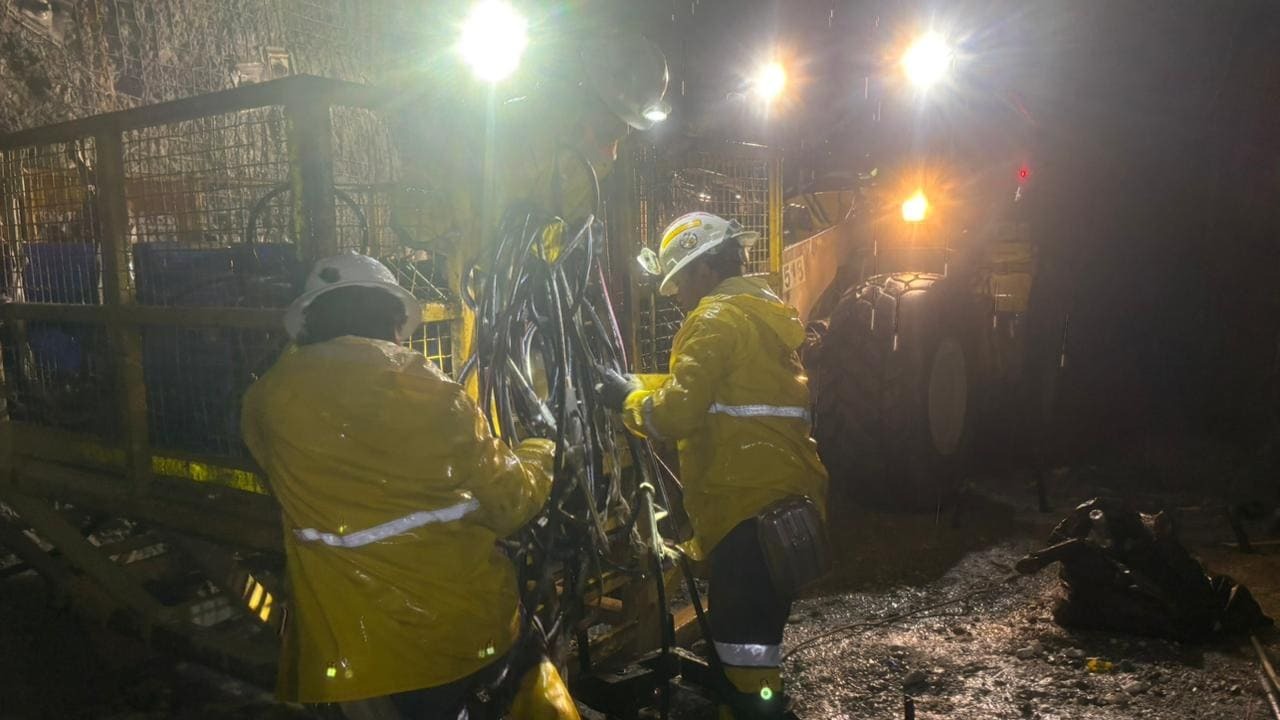
Figure 2. The team preparing a bundle of injection hoses before work inside the tunnel.
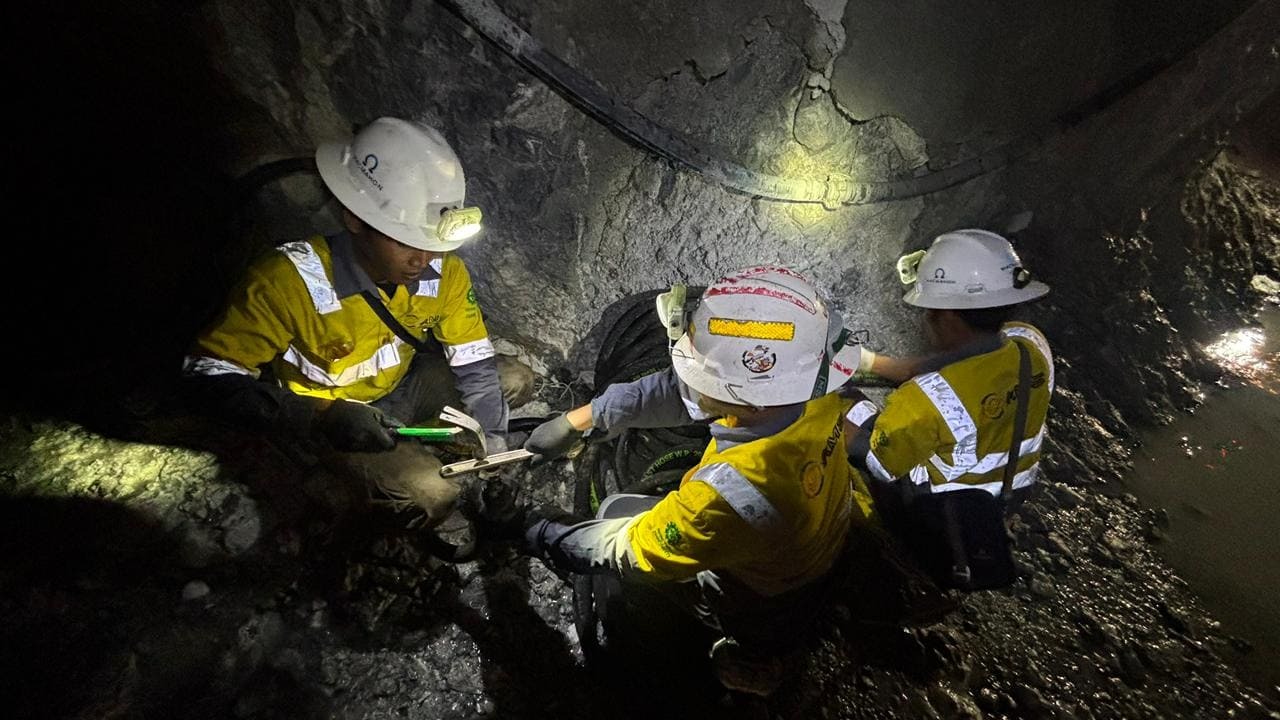
Figure 3. The field team handling injection equipment at an underground rock wall.
- Grout mixing - Mixing grout at a controlled water–cement (w/c) ratio, starting thin and thickening gradually.
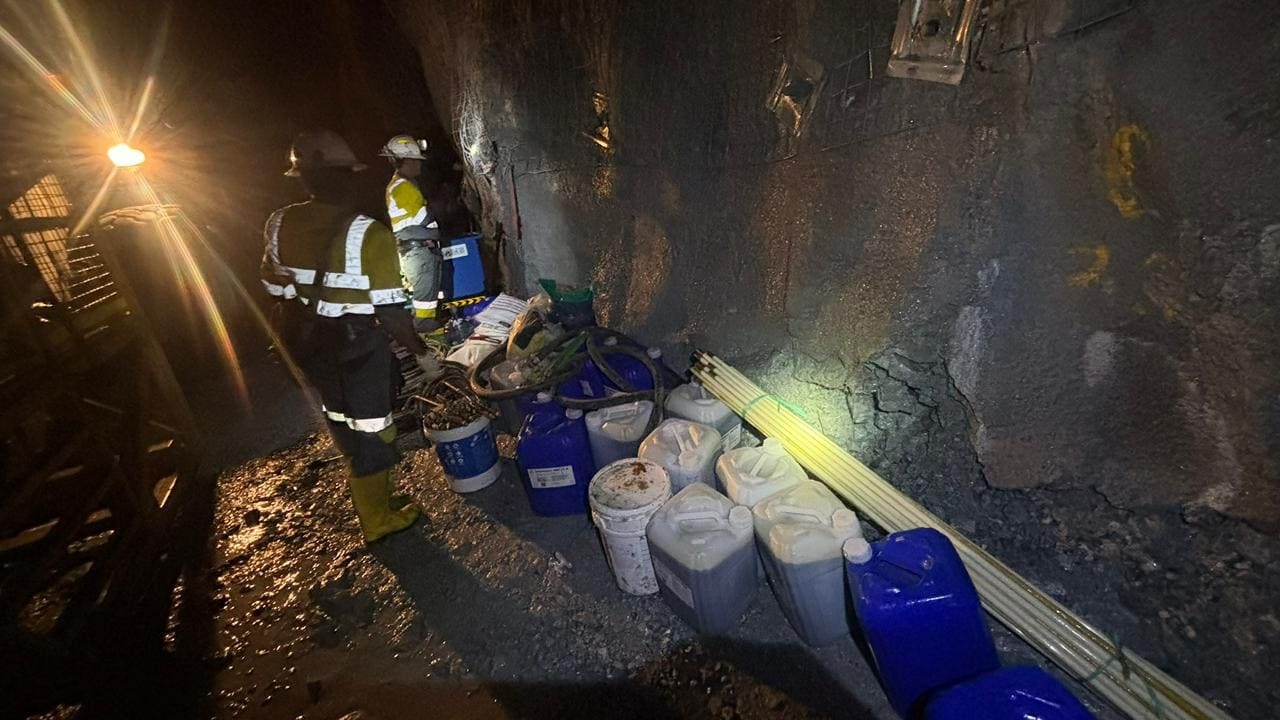
Figure 4. Grout material jerrycans prepared near the underground work area.
- Injection - Injecting grout at controlled pressure while continuously recording volume and pressure.
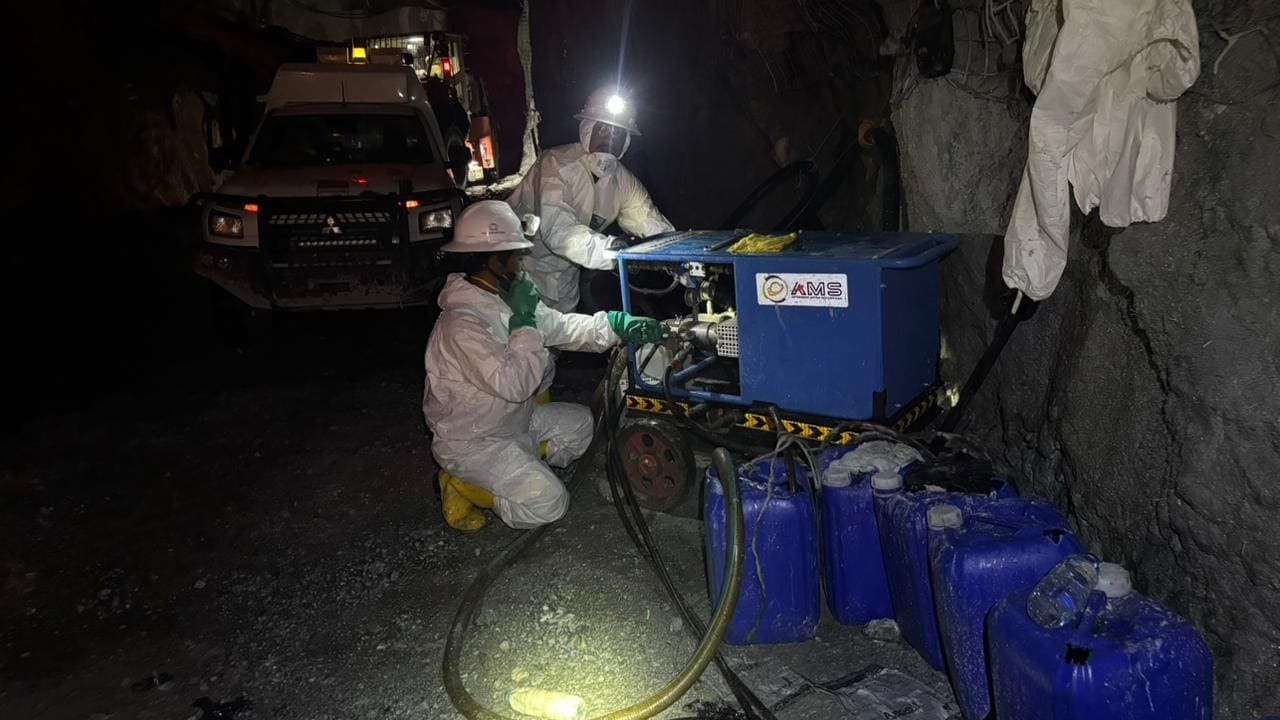
Figure 5. An grout pump used for pressurized grout injection underground.
- Refusal control - Stopping injection when the refusal criterion is reached at the design pressure.
- Verification - Verification testing (repeat Lugeon test, coring, or water pressure test) to confirm the results.
Injection Grouting Technical Data and Facts
The table below summarizes typical parameters as an initial reference. Actual values must be determined through design based on geotechnical investigation and field test results.
- Borehole Diameter
- Typical value: 46–100 mm.
- Adjusted according to the method and equipment used.
- Water-to-Cement Ratio (w/c)
- Typical range: 5:1 to 0.5:1.
- Grouting typically begins with a more fluid mix, which is then gradually thickened as required.
- Injection Pressure
- General guideline: ≈ 0.2–0.25 bar per meter of depth.
- Pressure should be limited to prevent uncontrolled ground fracturing.
- Hole Spacing (Split-Spacing)
- Initial spacing: 3–6 m.
- Hole spacing is then gradually reduced as necessary.
- Typical sequence: Primary → Secondary → Tertiary.
- Lugeon Test
- Reference: 1 Lugeon ≈ 1 L/min/m at a pressure of 10 bar.
- Used to measure the permeability of the rock mass.
- Dam Curtain Grouting Criteria
- Target: ≤ 1–3 Lugeon.
- Serves as a watertightness threshold for evaluating the effectiveness of the grout curtain.
Note: the ranges above are general practice references and are not a substitute for design calculations. Always verify against applicable standards and site conditions.
“The Lugeon test is the standard benchmark for rock mass permeability in grouting design: one Lugeon unit is equivalent to a water loss of about one liter per minute per meter of borehole at a pressure of 10 bar.”
Case Study and Application Example in Mining
Application example (technical illustration): the foundation of a mill (processing plant) is planned to stand on rock with fractures and weak zones. To ensure bearing capacity, consolidation grouting is carried out injecting low-pressure cement slurry through a split-spacing hole pattern until the refusal criterion is reached. Verification by Lugeon testing shows that permeability dropped significantly, so the mill foundation can safely carry heavy equipment loads and operating vibrations.
Scenarios like this reflect real geotechnical work in the field. As a track record, APTEKINDO handles a wide range of ground and rock reinforcement work for major mining clients, including:
- Ground Anchor Project (Micropile) for the Mill Foundation with PT Agincourt Resources foundation work closely related to reinforcement grouting.
- Rock Anchor for PT Agincourt Resources’ Vertical Mill Expansion Project, reinforcing heavy structure foundations.
- Pre-excavation grouting services provided by APTEKINDO, including for underground mine development.
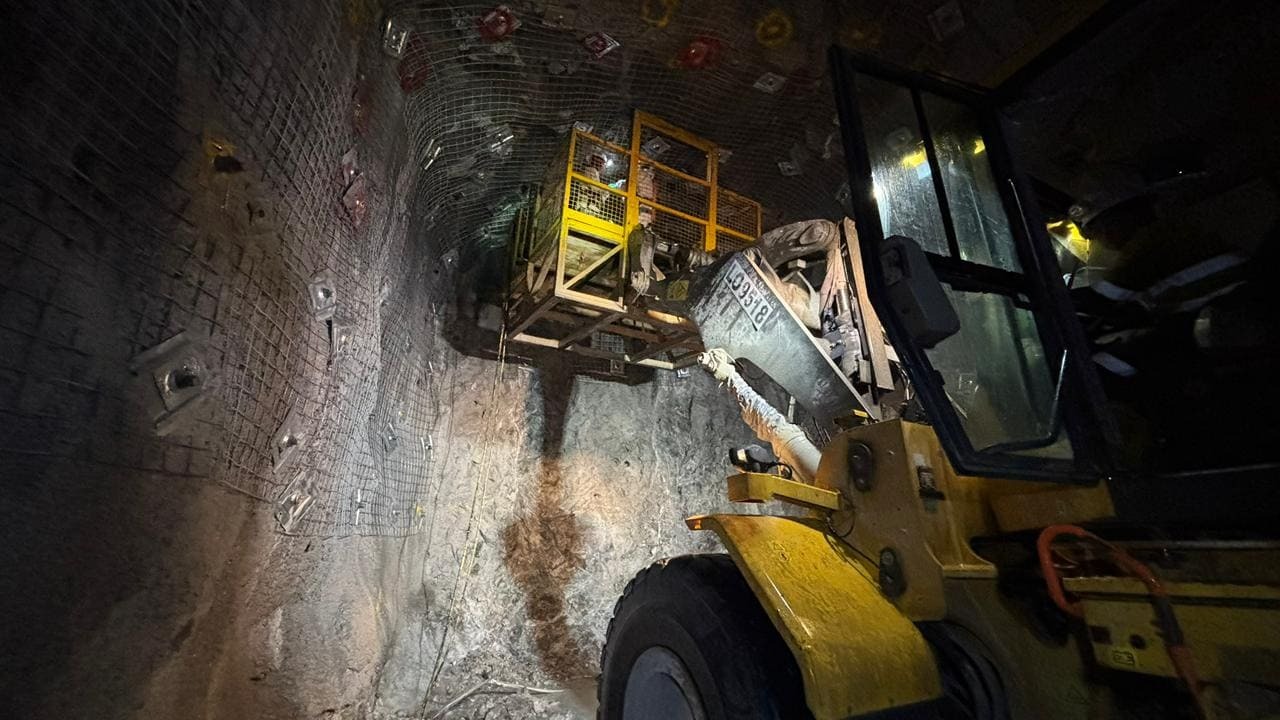
Figure 6. A wheel loader with a work basket for reaching underground tunnel walls.
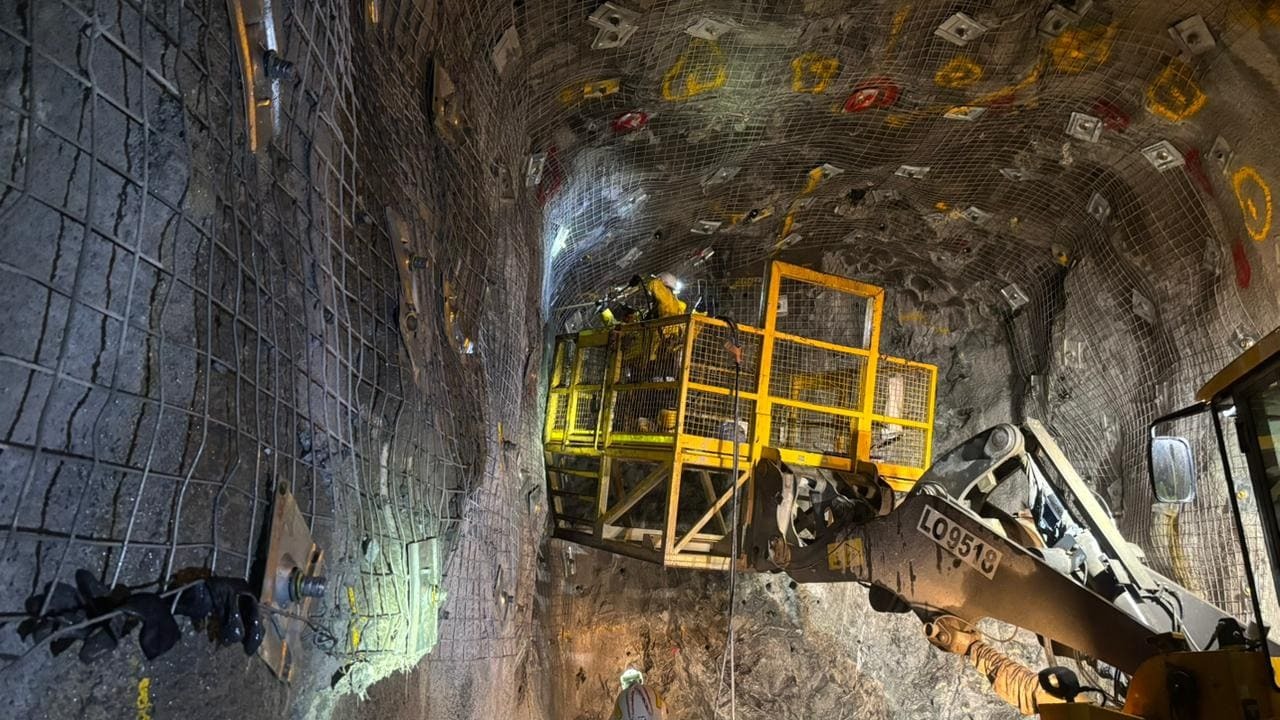
Figure 7. Reinforcement work on tunnel walls and roof using a work basket.
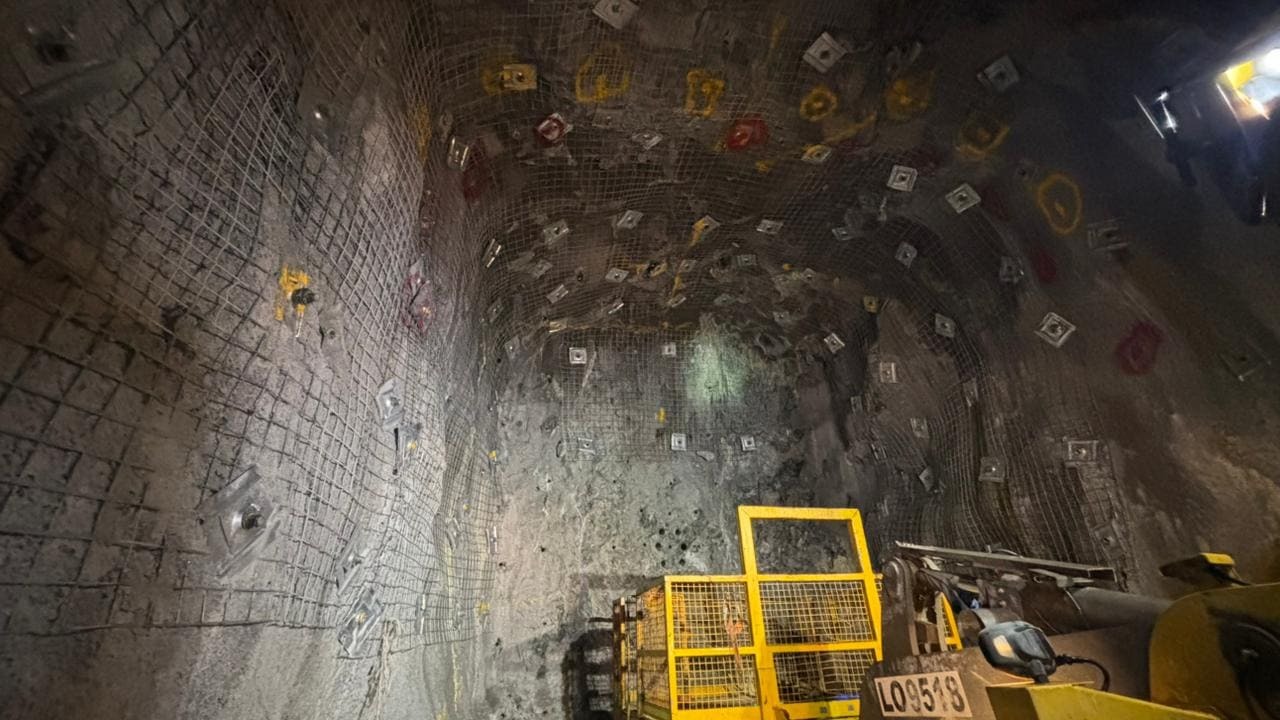
Figure 8. A tunnel wall fitted with wiremesh and bearing plates for rock reinforcement.
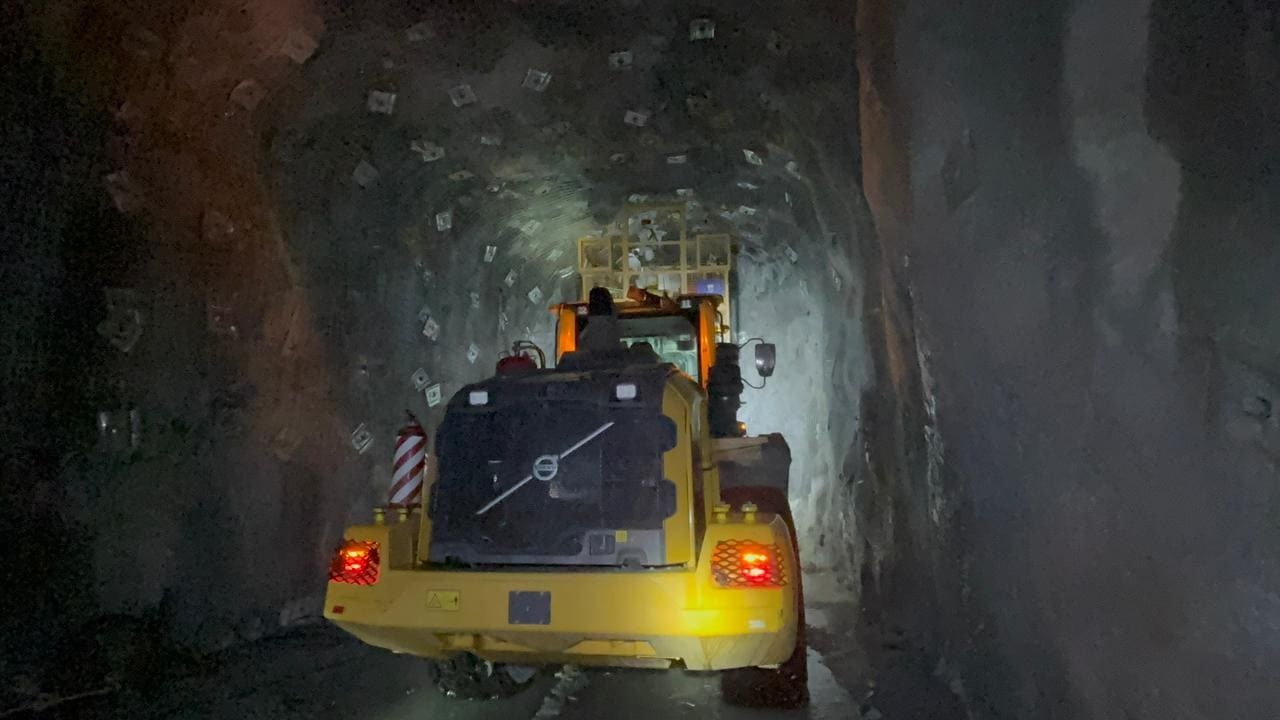
Figure 9. An underground tunnel with a roof surface that has been reinforced.
Advantages and Disadvantages of Injection Grouting
Advantages:
- Repairs soil/rock in place without major demolition minimal operational disruption.
- Can be applied to existing structures and in limited working space.
- Flexible: many types of methods & materials for various conditions.
- Highly effective for water control and sealing off seepage.
- Increases bearing capacity and strength without adding load to the structure.
Disadvantages:
- Results are hidden below the surface and hard to verify visually requires strict testing & QA/QC.
- Risk of heaving or uncontrolled fracturing (claquage) if injection pressure is excessive.
- Chemical materials (epoxy/PU) are relatively expensive and require special occupational health and safety (OHS) handling.
- Highly dependent on the quality of the geotechnical investigation and operator expertise.
- Grout spread is difficult to control in heterogeneous ground.
Tips and Recommendations for Applying Injection Grouting
- Carry out permeability testing (Lugeon test/water pressure test) before designing the grouting pattern and pressure.
- Use the split-spacing method (primary–secondary–tertiary) to fill gaps progressively and thoroughly.
- Start with thin grout, then thicken gradually for optimal penetration without wasting material.
- Limit injection pressure according to depth to prevent unwanted ground fracturing.
- Record the volume and pressure of every stage as QA/QC documentation and a basis for verification.
- Choose materials according to the objective: cement for large voids, chemical resin/PU for fine cracks and strong water flow.
- Engage an experienced grouting service provider so that design, execution, and testing meet standards.
Supporting Materials and Solutions for Injection Grouting
The success of injection grouting depends heavily on the quality of the grout materials. As an official distributor of SIKA Mining Solutions and an integrated geotechnical service provider, APTEKINDO offers a range of materials and services for every grouting need:
- Cement-based grout - Sikagrout® 215 NEW and Sikagrout® 214-11 (non-shrink grout) for void filling and precision grouting that is stable and high-bond.
- Chemical injection (epoxy) Sikadur® 505 (injection epoxy) and Sikadur® 732 (epoxy bonding agent) for injecting and sealing structural concrete cracks.
- Polyurethane (PU) injection - Sikaboom® (expanding polyurethane) to fill voids and stop seepage and water flow.
- Supporting admixtures - Sika® ViscoCrete® 305ID and Viscoflow® 3660 LR to control the workability and strength of grout/concrete mixes.
- Joint waterstop Sika® Waterbar (PVC waterstop) to protect joints against water.
In terms of services, APTEKINDO provide Pre-Excavation Grouting, Artificial Ground Support (rock bolting, cable bolting), and Geotechnical Solutions (rock anchoring, foundations) from analysis and material supply to field execution.
Frequently Asked Questions (FAQ)
What is injection grouting?
Injection grouting is a ground and rock reinforcement method that injects pressurized grout material (cement, chemical, or resin) into pores, voids, and fractures through boreholes to fill gaps, strengthen the ground, and hold back water seepage.
What is the difference between cement grouting and chemical grouting?
Cement grouting (cement grout) is suitable for filling medium-to-large voids and fractures and is more economical. Chemical grouting (epoxy or polyurethane) is used for fine cracks and strong water flow conditions because it can penetrate small gaps and, in some cases, expands rapidly to hold back water.
What are the main functions of injection grouting?
The three main functions are filling voids/fractures, increasing the bearing capacity and strength of soil/rock, and controlling water seepage (seepage control) in foundations, tunnels, and dams.
What is the Lugeon test in grouting?
The Lugeon test is a rock mass permeability test. One Lugeon unit is equivalent to a water loss of about one liter per minute per meter of borehole at a pressure of 10 bar. This value is used as a reference for designing and evaluating the success of grouting.
When does a project need injection grouting?
Injection grouting is needed when there are hidden voids or fractures, insufficient bearing capacity of soil/rock, or water seepage in foundations, tunnels, dams, and tailings ponds especially when re-excavation is not possible or too expensive.
Conclusion
Injection grouting is an efficient and versatile ground and rock reinforcement method it repairs material from within by injecting pressurized grout to fill voids, increase bearing capacity, and hold back water seepage. With the right choice of type and materials and strict quality control, this method can solve difficult geotechnical problems without major demolition.
The key to success lies in three things: accurate geotechnical investigation and permeability testing, selecting grout materials that suit the objective, and execution and testing by an experienced team. All three must go hand in hand so that grouting results are measurable and durable.
Need a Measurable and Proven Injection Grouting Solution?
APTEKINDO is ready to support your project from the supply of grouting materials (non-shrink grout, epoxy & polyurethane injection, admixtures) to integrated Pre-Excavation Grouting, Geotechnical Solutions, and Artificial Ground Support services. Consult your injection grouting needs with our technical team now for a safe, efficient ground and rock reinforcement solution that meets standards.
Contact APTEKINDO: sales@aptekindo.com & engineering@aptekindo.com
