

Mining plays a strategic role in supporting modern life. Various international studies indicate that this sector forms the foundation of economic development, enhances social welfare, and provides essential minerals for nearly all aspects of life from construction to high technology. In the context of the global energy transition, demand for critical minerals for electric vehicles, renewable energy, and energy storage systems continues to increase (Cole & Broadhurst, 2021; Yu et al., 2025).
A number of studies also emphasize that the future of a sustainable economy heavily depends on how mining activities are managed responsibly and measurably (Frederiksen & Banks, 2022). A report from the Columbia Center on Sustainable Investment further underscores that strategic mineral resource management is key to ensuring a just and inclusive energy transition.
In this context, the challenge for the industry and mining companies is not to reduce the role of mining, but rather to strengthen governance so that production activities run in alignment with long-term sustainability principles. An adaptive, strategic, and visionary approach becomes an essential foundation to ensure that industrial growth continues to provide optimal benefits for both present and future generations.
From Price Stability to Long-Term Sustainability
The adjustment of the 2026 RKAB (Work Plan and Budget) in the mineral and coal sector can be viewed as a strategic step in managing resources in a more measurable manner. Through the RKAB mechanism, the government and mining companies have a clear instrument to align production plans with market needs and national policy direction.
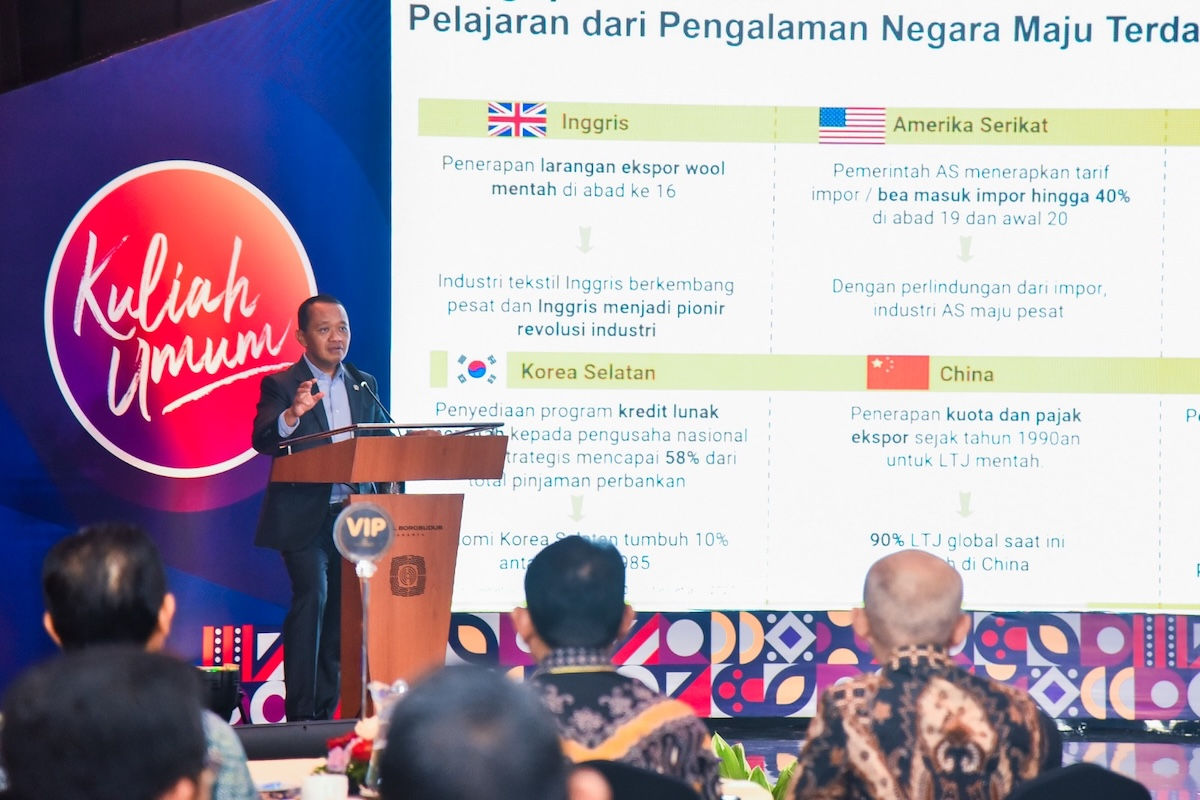
The Minister of Energy and Mineral Resources (ESDM), Bahlil Lahadalia, emphasized that the RKAB adjustment policy aims to balance supply and demand, maintain commodity price stability, and ensure that energy reserves remain available for future generations. This approach demonstrates that production management through RKAB is not merely an operational matter, but also part of intergenerational responsibility.
The positive market response to this policy further reflects Indonesia’s strategic position in the global supply chain. The Director General of Minerals and Coal, Tri Winarno, stated that following the announcement of production adjustments, nickel prices experienced significant strengthening. This indicates that measured production policies through RKAB can have a direct impact on global market stability.
As one of the world’s largest nickel producers, Indonesia holds an important role in maintaining market balance while ensuring optimal added value for the country and all mining companies operating within it.
As part of the national mining industry ecosystem, APTEKINDO views the 2026 RKAB adjustment as momentum to strengthen the governance of mining companies in a more professional and well-directed manner.
The policy conveyed by the Minister of ESDM demonstrates the government’s commitment to ensuring that mineral and coal production runs in a measurable manner and remains aligned with global dynamics. This approach provides directional certainty for all industry players, including mining companies and mining contractors.
As a contractor company, APTEKINDO understands that adaptive RKAB implementation is not only related to production volume, but also to improving operational efficiency, optimizing costs, and implementing higher standards of safety and environmental practices.
APTEKINDO believes that measurable production governance through RKAB will further strengthen the competitiveness of national mining companies in the global market, while ensuring more sustainable resource management.
As an operational partner for IUP holders, APTEKINDO sees this policy direction as part of the industry’s transformation toward more professional, competitive, and sustainable mining. Going forward, collaboration among regulators, mine owners, mining companies, and contractors will be key to ensuring that industrial growth remains aligned with sustainability principles and the interests of future generations.
Sources:
Adibi N, Ataee-pour M, Rahmanpour M. 2015. Integration of sustainable development concepts in open pit mine design. Journal of Cleaner Production. 108(A):1037–1049.
Cole MJ, Broadhurst JL. 2021. Measuring the sustainable development goals (SDGs) in mining host communities: A South African case study. The Extractive Industries and Society. 8(1):233–243.
Frederiksen T, Banks G. 2022. How would a mining sector that was committed to sustainable development behave: a 21st century manifesto. The Extractive Industries and Society. 11:101116.
Ministry of Energy and Mineral Resources of the Republic of Indonesia. 2026. Adjustment of Mining Companies’ RKAB, Minister Bahlil: Maintain Prices, Secure Energy Reserves. Ministry of ESDM. 13 February 2026. Available online: https://www.esdm.go.id/id/media-center/arsip-berita/penyesuaian-rkab-perusahaan-tambang-menteri-bahlil-jaga-harga-amankan-cadangan-energi (accessed 27 February 2026).Yu H, Zahidi I, Fai CM, Liang D. 2025. From devastation to restoration: Charting the course towards sustainable mining practices. Journal of Environmental Management. 391:126660.
- Share