


Effect of Water on Grouting in Underground Gold Mining
Groundwater, Grouting, Underground Mining
Water seeping through small fractures in rock may appear insignificant. However, in underground gold mining, this seemingly minor phenomenon can trigger substantial changes in rock mass stability.
Under natural conditions, rock masses exist in a balanced state between stress, material strength, and environmental factors. Mining activities disturb this equilibrium. Excavations create new pathways for groundwater flow while simultaneously altering stress distribution within the rock mass. These conditions become increasingly complex when water begins to interact directly with rock materials.
The interaction between water and rock is far from simple. Water not only fills void spaces but also induces physical and chemical changes within the rock. Studies on water rock interaction indicate that the presence of water can significantly reduce the mechanical strength of rock. This is primarily due to the weakening of interparticle bonds and softening processes that make the rock more susceptible to deformation (Su et al., 2024).
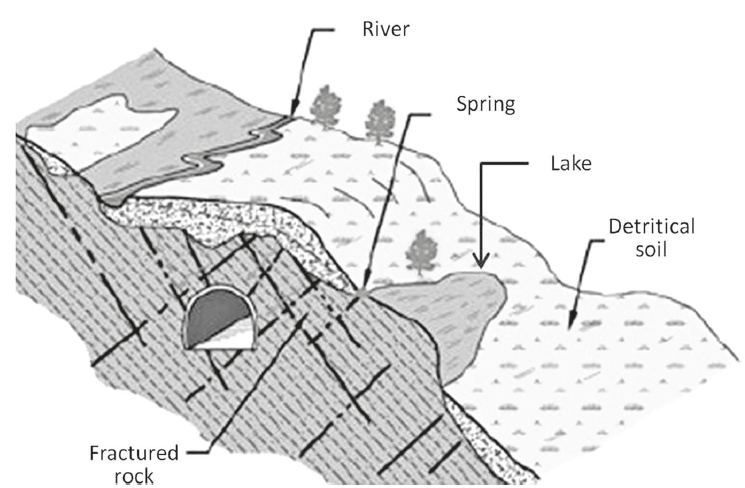
Figure 1. Conceptual scheme of potential interactions between a tunnel and surrounding aquifers (Gattinoni et al., 2014).
In addition, water can trigger expansion in certain minerals, particularly in clay-bearing rocks. When these minerals absorb water, they expand, generating internal pressure within the rock structure. This process accelerates the formation of new fractures and enlarges existing ones, ultimately increasing rock permeability and allowing water to flow more freely.
This increase in permeability represents a major challenge in underground gold mining. Expanded flow paths can lead to higher water inflow rates into the mine. In extreme cases, this may develop into a water inrus a sudden and massive inflow of water that can cause structural failure and pose serious safety risks to workers.
Studies on tunneling and groundwater interaction show that water inflow into underground openings is strongly influenced by geological conditions and surrounding hydraulic pressures. When groundwater pressure exceeds the internal pressure within the excavation, water naturally flows into the opening following the pressure gradient. If left uncontrolled, this flow may transport fine particles and weaken the surrounding rock structure (Lo Russo et al., 2015).
In gold mining contexts, this issue becomes even more critical because ore zones are often located in altered rocks with relatively low strength. Such rocks are more vulnerable to water influence and degrade more rapidly. Therefore, groundwater control is a key factor in maintaining mine stability.
One of the most widely used methods for groundwater control is grouting. Grouting involves injecting materials into rock fractures to reduce permeability and control water flow. This method works by filling voids that act as flow pathways, thereby reducing or even stopping water movement.
Grouting materials can consist of cement-based mixtures or chemical compounds. The selection depends on fracture size and rock conditions. Larger fractures require materials with high filling capacity, while smaller fractures require low-viscosity materials to penetrate fine openings effectively.
In practice, grouting is not only a remedial method but also an integral part of risk management. By sealing water pathways, grouting reduces pore pressure within the rock mass. This reduction in pore pressure increases shear strength, contributing to improved overall stability.
Furthermore, grouting plays a role in maintaining safe working conditions within the mine. Uncontrolled water inflow can create wet and slippery environments, increasing the risk of accidents. By limiting water ingress, grouting helps create a safer and more efficient operational environment.
However, the effectiveness of grouting largely depends on a solid understanding of hydrogeological conditions. Studies emphasize that groundwater control must be supported by robust monitoring systems. Monitoring helps identify flow patterns, groundwater level changes, and system responses to mining activities (Lo Russo et al., 2015).
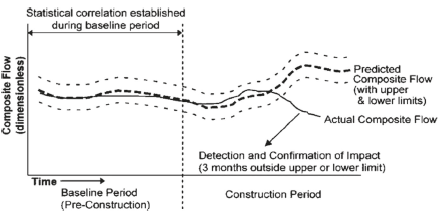
Figure 2. Use of composite flow analysis to identify environmental impacts (Premadasa et al., 2006).
This monitoring typically includes observations of wells, springs, and in-mine water conditions. The collected data is used to determine areas requiring grouting and to evaluate the effectiveness of implemented measures. Without adequate monitoring, grouting may become ineffective due to improper targeting.
In some cases, grouting is also applied as a waterproofing method to protect underground structures from water ingress. Injection is carried out in stages to ensure even distribution of grout material and complete sealing of flow pathways. This approach is commonly used in tunneling projects and can be effectively adapted to underground mining operations with similar conditions.
Ultimately, water–rock interaction is an unavoidable factor in underground gold mining. Water has the ability to alter the mechanical properties of rock and increase instability risks. Therefore, effective groundwater control is essential.
Grouting stands out as a reliable solution to this challenge. By reducing permeability and controlling water flow, it helps maintain rock stability and supports operational safety. However, its success depends on proper integration with monitoring systems and a comprehensive understanding of geological and hydrogeological conditions.
In this context, groundwater control is not merely about reducing water volume—it is about understanding how water interacts with rock and how that interaction can be managed to ensure overall mine stability.
References
Gattinoni, P., Pizzarotti, E., & Scesi, L. (2014). Engineering Geology for Underground Works. Springer.
Lo Russo, S., Taddia, G., & Cerino Abdin, E. (2015). Tunnelling and groundwater interaction: the role of hydrogeological monitoring.
Premadasa, M. A., & Waterman, M. K. (2006). Identifying environmental impacts of underground construction. Hydrogeology Journal, 14, 1160–1170.
Su, X., et al. (2024). Influence of water–rock interaction on stability of underground engineering.
- Share