


Micropile Foundation: Its Role in Enhancing Sheet Pile Wall Stability
Slope stability in mining areas is often determined by how retaining structures perform under pressures that are not always predictable. In certain conditions, relying on a single system is not sufficient to maintain the balance between safety and construction efficiency.
Sheet pile walls are one of the most commonly used solutions, especially in areas with soft soil or limited working space. These structures work by resisting lateral soil pressure through pile elements driven into the ground, allowing them to maintain the stability of excavations and slopes. Their performance is highly dependent on the interaction between soil and structure, including embedment depth and the anchoring system used (Potts and Fourie, 1993).
However, under field conditions such as gold mining environments with heterogeneous soil characteristics and high operational loads, sheet piles often require additional support. High soil pressure and the potential for long term deformation present challenges that must be anticipated from the design stage, particularly when soil structure interaction cannot be easily controlled (Potts and Fourie, 1993).
In such situations, micropile foundations provide a reinforcement solution that enhances soil bearing capacity while strengthening the existing retaining system. Micropiles are small diameter foundation elements that can be installed in confined areas and complex ground conditions, making them highly suitable for mining applications.
The role of micropiles in this system extends beyond additional support, as they also improve the overall stiffness of the foundation. With micropiles in place, load distribution becomes more uniform, soil deformation can be reduced, and the stability of the retaining structure is improved. Parameters such as pile length, diameter, and group configuration are key factors in determining the effectiveness of this system (Vakili et al., 2025).
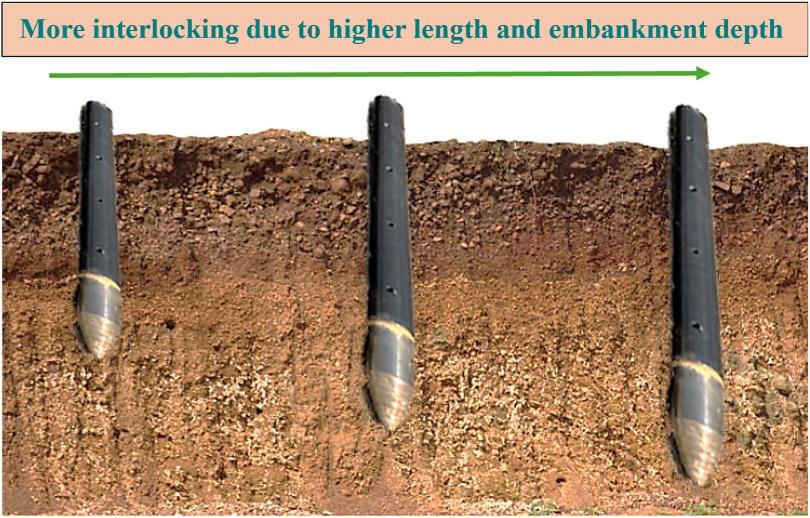
Figure 1. Higher interaction and interlocking between soil and the micropile due to a greater effective length
The interaction between micropiles and soil also provides improved interlocking effects, particularly when the effective pile length reaches more stable soil layers. This contributes to increased resistance against lateral loads while reducing the potential movement of the sheet pile structure (Vakili et al., 2025).
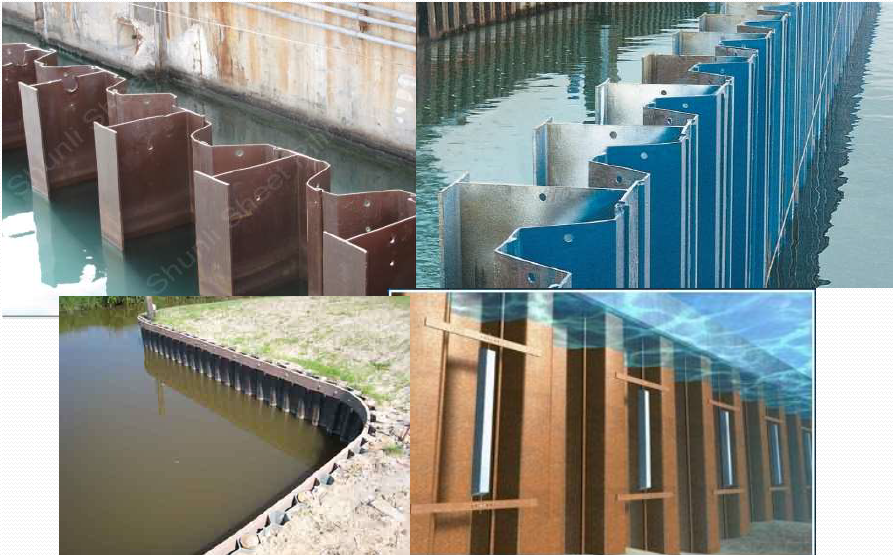
Figure 2. Sheet Pile Installation
The combined application of sheet piles and micropile foundations is widely used in areas with high instability risks, such as mining slopes, zones near tailings facilities, and working areas subjected to continuously changing heavy loads. This approach offers flexibility in design while increasing the safety margin without requiring major modifications to the primary system.
The need for solutions that adapt to field conditions like these requires an approach that is not only based on theory, but also on practical experience. APTEKINDO understands that each mining site presents unique challenges, making the selection of foundation and retaining systems a process that must be precise and integrated. Through experience across various geotechnical projects, APTEKINDO delivers solutions that are not only technically robust, but also aligned with actual field conditions
References
Potts, D. M., & Fourie, A. B. (1993). Numerical study of the behaviour of anchored sheet pile walls. https://doi.org/10.1016/0148-9062(93)90613-I
Vakili, A., et al. (2025). Experimental study on the lateral performance of micropile groups in sandy soil. https://doi.org/10.1016/j.rineng.2025.105663
- Share