

Advantages of Wire Mesh in Underground Gold Mining
Wire Mesh, Reinforced Concrete, Underground Mining, Groundwater
At depths reaching hundreds of meters, rock masses that appear solid are, in reality, never completely static. They continuously undergo stress redistribution, responding to voids created by human activities. Under certain conditions, these subtle movements can evolve into hazardous rockfalls, often without clear warning signs.
Underground gold mining operations are widely recognized for their high geotechnical complexity. This is primarily due to the heterogeneous nature of rock masses, the abundance of natural fractures, and the presence of discontinuities such as joints and faults. Excavation activities disturb the natural stress equilibrium, forcing the rock mass to adapt. This adaptation is often manifested through deformation, the formation of new cracks, and an increased potential for failure.
These challenges become even more critical at greater mining depths. The deeper the excavation, the higher the vertical stress induced by the overburden. Additionally, uneven horizontal stress distribution can lead to stress concentrations in specific areas, particularly around tunnel roofs and walls. Without adequate support systems, such conditions may result in structural failure within a relatively short period.
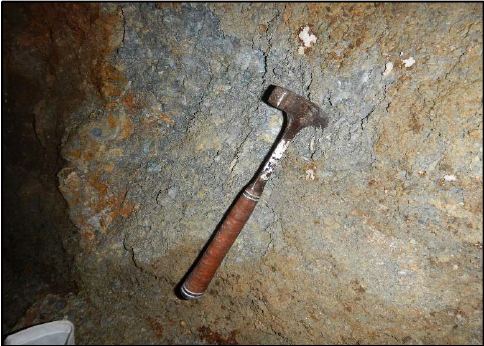
Figure 1. Weak ground conditions commonly encountered in or near ore bodies in underground gold mines in Nevada.
On top of that, groundwater presence often exacerbates underground stability issues. Water infiltrates rock fractures and increases pore pressure within the rock mass. This rise in pore pressure directly reduces shear strength, making the rock more prone to detachment. In some cases, groundwater also transports fine particles out of rock voids, gradually enlarging cavities and accelerating the risk of collapse.
In addressing the combined effects of rock stress and groundwater, ground support systems play a crucial role. One of the primary elements in early-stage support is wire mesh. Wire mesh is used to retain loose materials on the rock surface following excavation. These materials typically consist of small fragments that are no longer bonded to the main rock mass and pose a risk of falling.
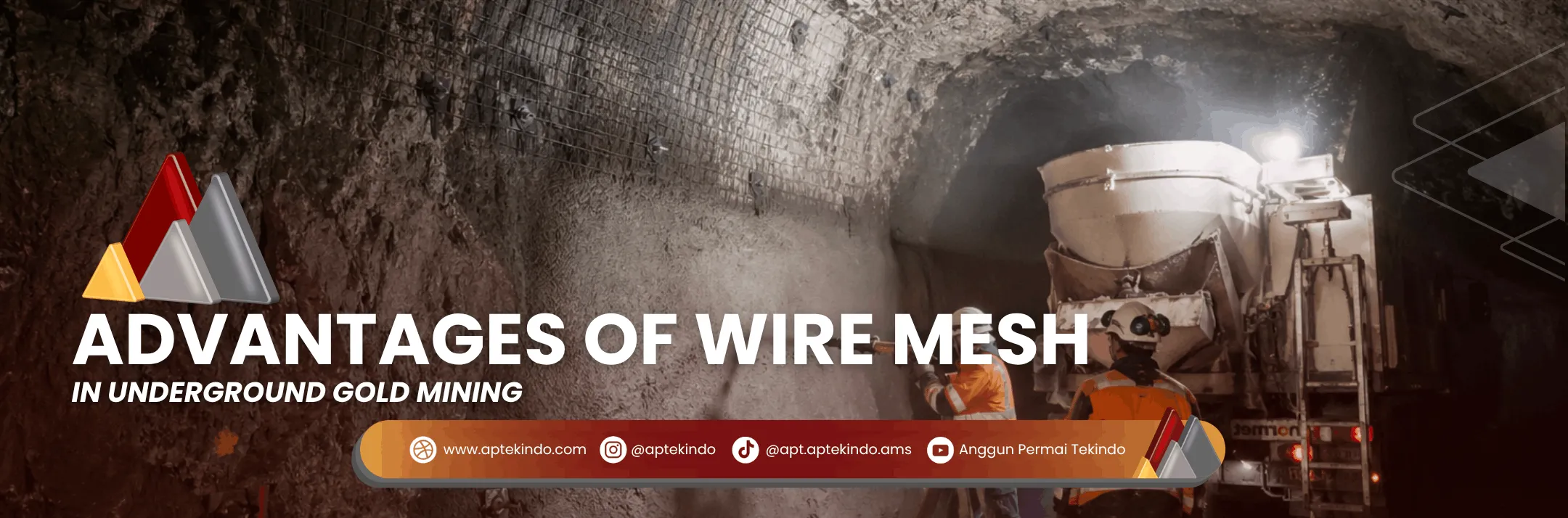
Wire mesh functions by securing these fragments in place. In practice, it is installed immediately after excavation as a first-line risk mitigation measure. To enhance its effectiveness, wire mesh is often combined with rock bolts, which anchor deeper rock layers. This combination forms a support system capable of controlling localized movement while maintaining surface stability.
However, while wire mesh is effective as an initial protective layer, it is not designed to withstand long-term structural loads. Therefore, an additional element with higher structural capacity is required—reinforced concrete in the form of shotcrete. Shotcrete is applied by spraying it directly onto the rock surface, forming a layer that conforms to the natural geometry of the excavation.
The use of reinforced shotcrete provides several key benefits. First, it seals minor cracks on the rock surface, reducing pathways for groundwater infiltration. Second, it creates a confinement effect that enhances the overall strength and stiffness of the support system. Third, it helps distribute loads more evenly, minimizing stress concentrations at critical points.
In some cases, shotcrete is further reinforced with fibers or combined with wire mesh to improve performance. These reinforcements enhance the material’s tensile capacity and energy absorption, which is particularly important in underground gold mines exposed to dynamic loads from blasting activities or stress redistribution.
The integration of wire mesh and reinforced concrete results in a complementary support system. Wire mesh acts as a rapid-response safety measure, while shotcrete provides more permanent structural reinforcement. Together, they significantly improve excavation stability in both short-term and long-term conditions.
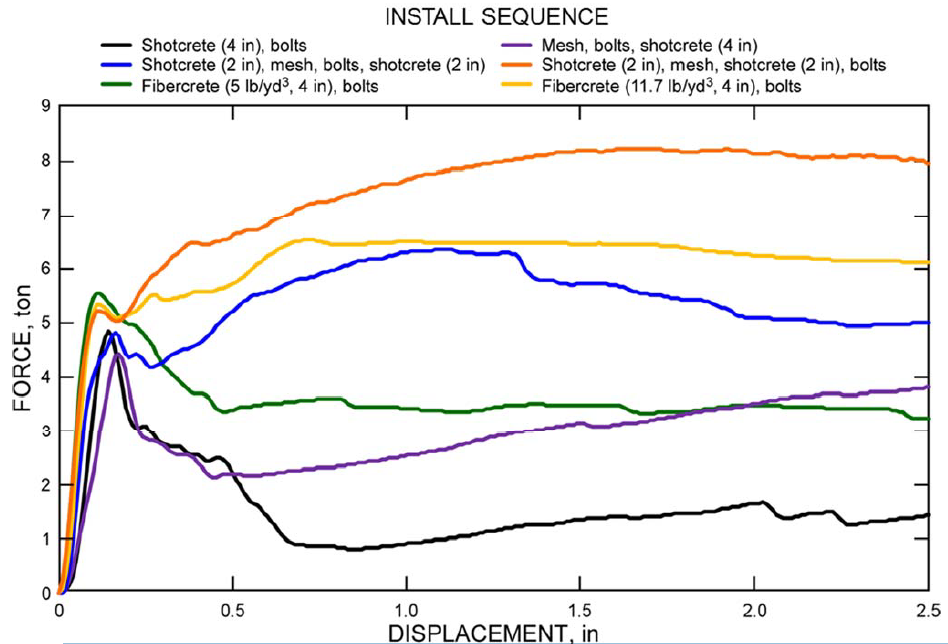
Figure 2. Comparison of post-crack performance between welded wire mesh reinforced shotcrete and macro-synthetic fiber reinforced shotcrete tested using the HEHD machine up to 2.5 inches of displacement between bolts.
Studies have shown that reinforced shotcrete exhibits superior energy absorption capacity and can withstand deformation without immediate failure (Raffaldi et al., 2018). This makes it highly suitable for underground mines subjected to high stress conditions and dynamic loading.
Furthermore, research indicates that the combination of shotcrete and wire mesh effectively maintains rock surface integrity even under significant dynamic loads. This system not only retains loose material but also ensures structural stability in rapidly changing conditions (Drover & Villaescusa, 2014).
In the context of underground gold mining operations, the implementation of proper ground support systems impacts not only technical performance but also worker safety. Rockfalls remain one of the most critical hazards in underground environments and often occur without warning. By optimizing the use of wire mesh and reinforced concrete, these risks can be significantly reduced.
Ultimately, underground mine stability is not solely determined by geological conditions, but also by how engineers respond through effective support design and implementation. Wire mesh and reinforced concrete stand as essential components—not only preserving structural integrity but also safeguarding the lives of those working underground.
References
Drover, D., & Villaescusa, E. (2014). Performance of shotcrete surface support following dynamic loading. Proceedings of the International Symposium on Ground Support in Mining and Underground Construction.
Raffaldi, M. J., Hyett, A. J., & Villaescusa, E. (2018). Reinforced shotcrete performance: quantifying the contribution of fibers and mesh. Proceedings of the International Symposium on Ground Support.
- Share