

Blasting and Mining Monitoring: Controlled Explosions
In modern mining operations, Blasting is far more than a rock fragmentation process to support production. It is a high-risk activity that generates ground vibration, airblast, and dynamic stress changes like affecting slopes, underground excavations, and nearby infrastructure.
This is why mining monitoring tools play a critical role in ensuring blasting activities remain measurable, controlled, and safe.
Why Monitoring Is Critical in Blasting Activities
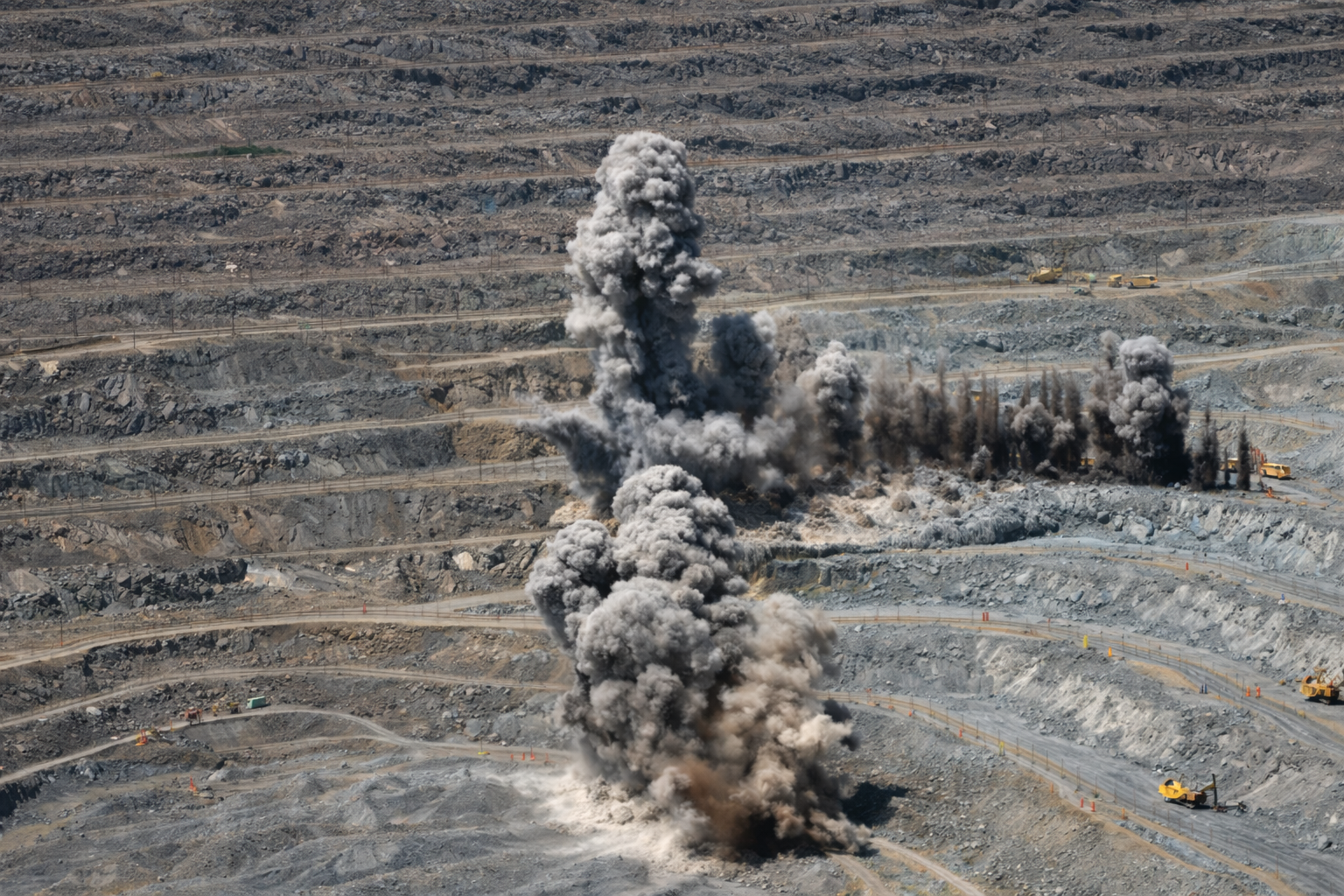
Blasting induces complex geomechanical responses. Without proper monitoring, engineers rely on assumptions. With monitoring, decisions are made based on real field data.
This principle is clearly stated in the Blasters’ Handbook:
“Blast vibration monitoring is essential to verify that ground motion remains within acceptable limits and to provide feedback for improving future blast designs.”
— International Society of Explosives Engineers (ISEE)
Key objectives include:
- Controlling ground vibration within safe limits.
- Measuring airblast and overpressure that may affect structures or personnel.
- Detecting rock mass and slope response after blasting.
- Providing data for blast design evaluation and optimization.
Key Monitoring Tools Used in Blasting Operations
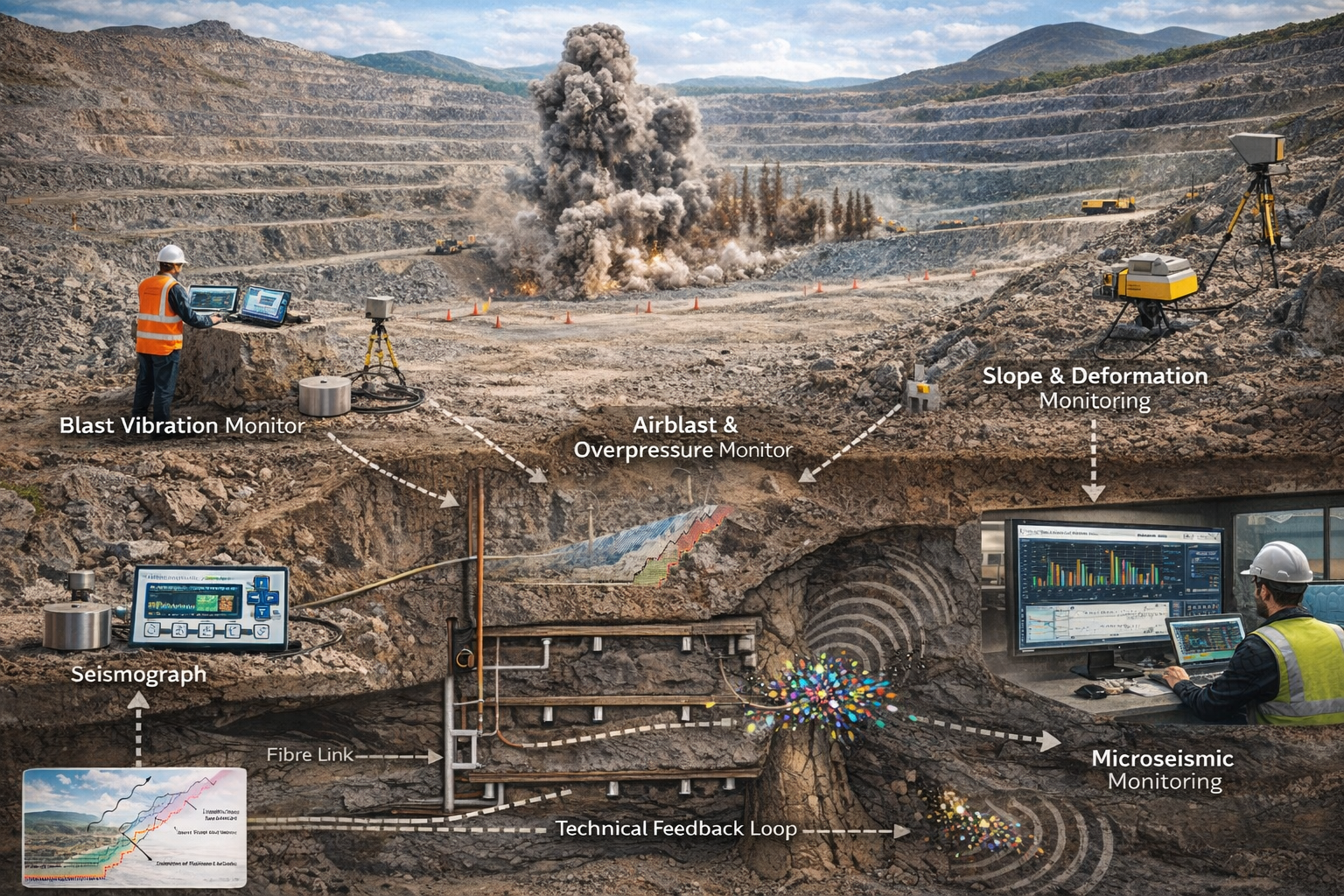
1. Seismograph / Blast Vibration Monitor
These instruments record Peak Particle Velocity (PPV), frequency, and vibration duration generated by blasting. PPV is the primary parameter used to assess potential damage to slopes, tunnels, and surface structures.
2. Airblast & Overpressure Monitoring
Airblast sensors measure air pressure waves produced by blasting. This monitoring is especially critical in open-pit mines operating near operational facilities or communities.
3. Slope and Ground Deformation Monitoring
Repeated blasting can accelerate slope deformation. Tools such as prism monitoring, extensometers, and slope radar systems detect subtle movements that are not visible but may evolve into slope failure.
This aligns with guidance from the ISRM Recommended Practices on Monitoring and Rock Mass Response:
“Monitoring of rock mass response provides early warning of instability and is a fundamental component of risk management in rock engineering.”
— International Society for Rock Mechanics (ISRM)
4. Microseismic Monitoring (Underground Mining)
In underground mines, microseismic systems record energy release from blasting-induced rock mass response. These data help identify high-stress zones and assess rockburst potential.
Integrating Monitoring Data with Blast Design
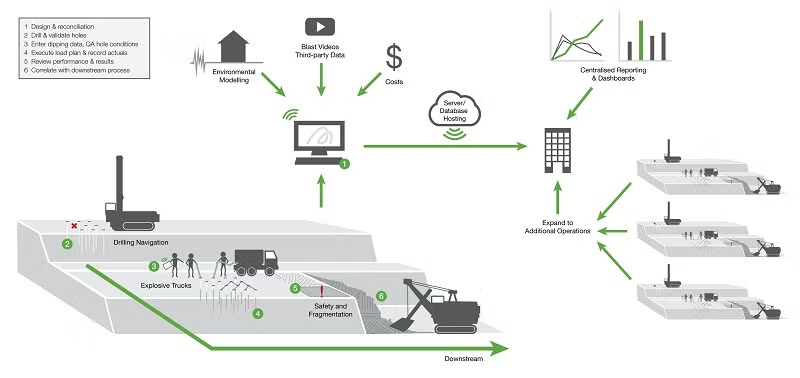
The real value of monitoring lies in its engineering feedback loop:
- Adjusting charge per delay and blast patterns.
- Optimizing delay timing to reduce vibration peaks.
- Defining safe exclusion and buffer zones.
- Developing site-specific SOPs based on historical performance data.
Through integration, Blasting evolves from a high-risk activity into a controlled engineering process.
Conclusion
From a safety and sustainability perspective, Blasting without monitoring is an avoidable risk. Mining monitoring tools ensure that every blast is understood, measured, and optimized to protect workers, infrastructure, and long-term mine performance.
Technical References
- International Society of Explosives Engineers – Blasters’ Handbook
- International Society for Rock Mechanics (ISRM) – Recommended Practices on Monitoring and Rock Mass Response
- Share