

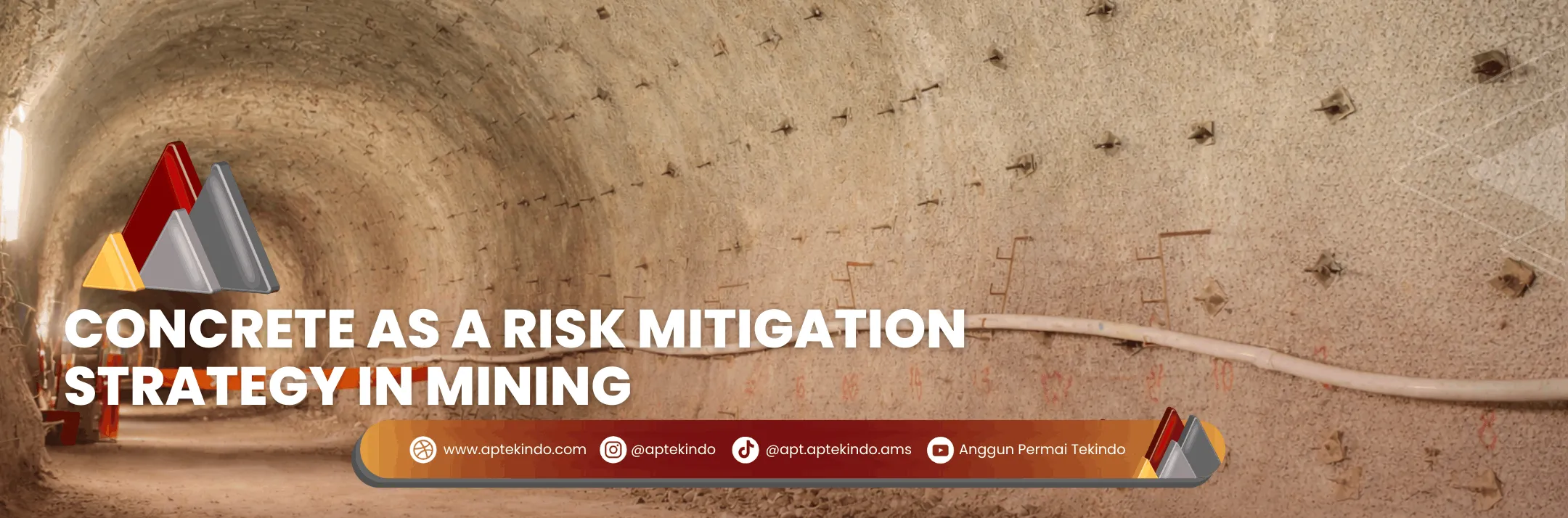
Concrete as a Risk Mitigation Strategy in Mining
In mining geotechnical practice, risk mitigation never relies on a single discipline. Effective risk control is determined by how well technical design is translated into consistent field execution. In this context, concrete plays a critical role as a structural mitigation element that functions as a load-bearing, load-distributing, and protective system.
Concrete in mining is not merely a construction material. It is an integral part of the ground control system, designed to work in harmony with geological conditions, mining sequences, and operational dynamics.
Concrete as a Geotechnical Mitigation Element

From a technical perspective, the primary mitigation functions of concrete include:
- Controlling early-stage deformation of mine openings
- Redistributing stresses in weak or fractured rock zones
- Protecting rock surfaces from water ingress, oxidation, and weathering
- Increasing stand-up time, particularly during initial excavation stages
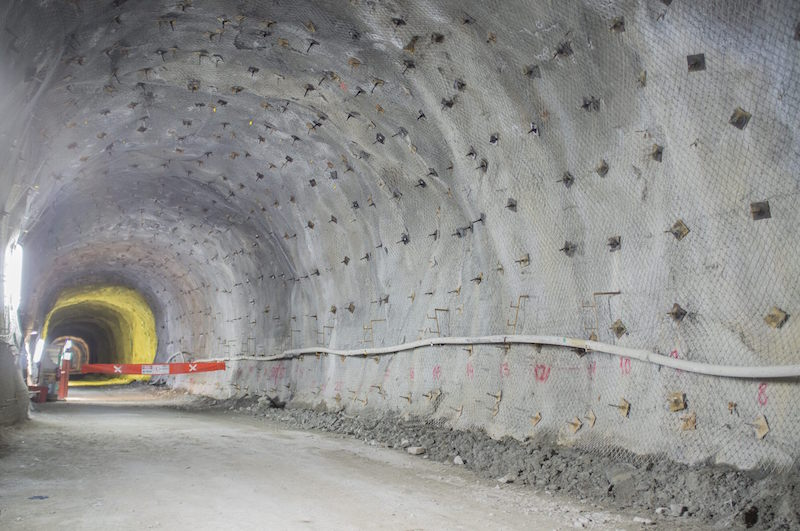
Shotcrete, for example, is designed to act compositely with the rock mass and other support systems. Parameters such as thickness, early-age strength, fiber type, and adhesion to the rock surface are critical in determining its effectiveness as a mitigation system.
Technical Approach: Design Based on Actual Conditions

At the engineering stage, concrete design must account for:
- Rock mass parameters (UCS, RMR, Q-System)
- Discontinuity orientation relative to excavation geometry
- Environmental conditions (wet, abrasive, or chemically aggressive environments)
- Interaction with rock bolts, cable bolts, and mesh
Effective concrete is not necessarily the strongest in nominal terms, but the most appropriate for its intended function and operating conditions. Overdesign often leads to inefficiency, while underdesign directly compromises safety and service life.
Operational Approach: From Specification to Field Performance
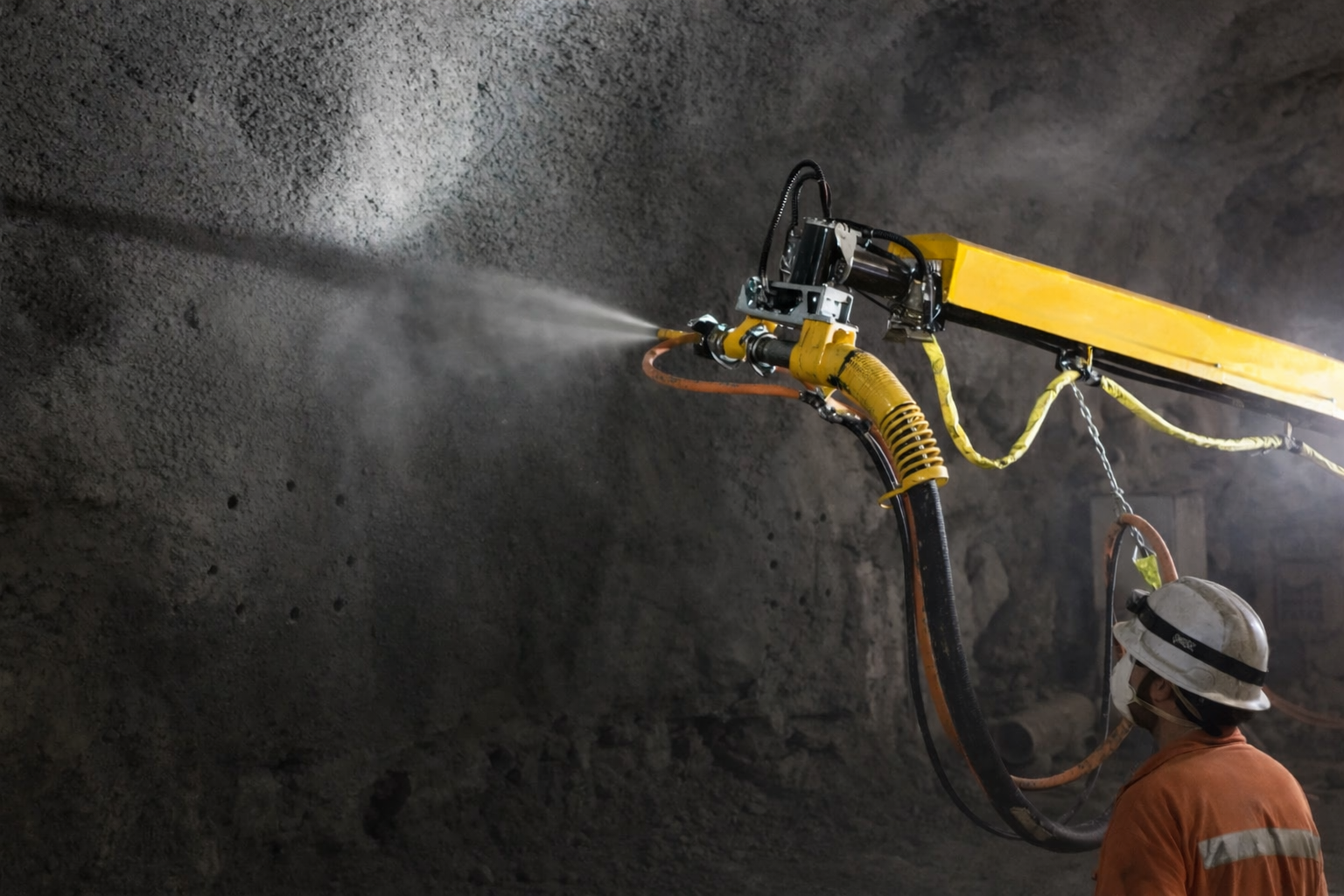
In the field, concrete performance is heavily influenced by operational factors, including:
- Batching quality and water–cement ratio control
- Application method and actual in-place thickness
- Setting time and curing under mining conditions
- Compliance with SOPs and post-application inspection
Many concrete failures in mining are not caused by poor design, but by the gap between design intent and field execution. Production pressure, access limitations, and environmental constraints frequently affect application quality if not addressed during the planning phase.
Technical Operational Integration as a Mitigation Principle
A mature mitigation approach positions concrete as:
- Part of a risk-based geotechnical design
- An element fully integrated into field work sequencing
- A structure subject to routine inspection and performance monitoring
With this integration, concrete is no longer treated as a passive structure, but as an active component of the ground control system. Cracking, debonding, or early degradation can serve as early indicators of changing geotechnical conditions.
Closing Remarks
In modern mining operations, effective mitigation depends on collaboration between planners and field practitioners. Concrete demonstrates how a structural material can perform optimally when understood as part of a system.
Realistic technical design, supported by disciplined operational execution, forms the foundation for maintaining safety, stability, and long-term operational sustainability.
Technical References
- Hoek, E., Kaiser, P.K., & Bawden, W.F. – Support of Underground Excavations, CRC Press
- Brady, B.H.G. & Brown, E.T. – Rock Mechanics for Underground Mining, Springer
- Grimstad, E. & Barton, N. – Updating the Q-System for NMT, ISRM
- Share